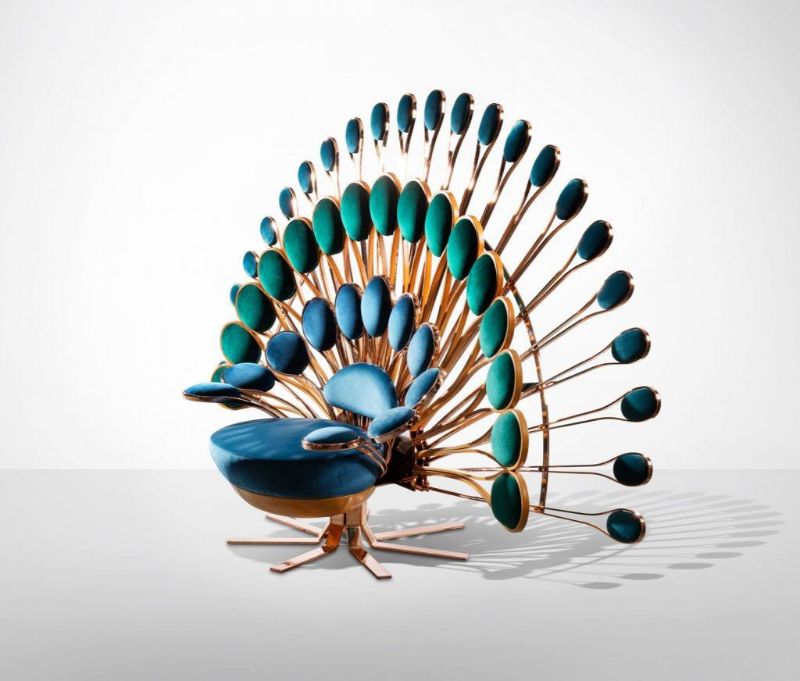
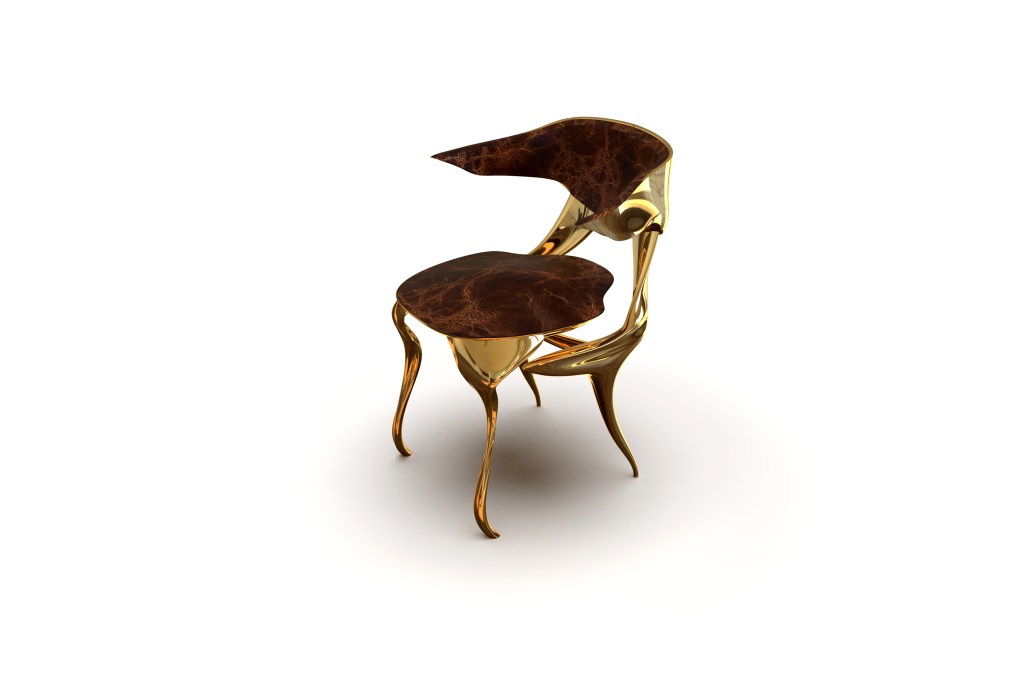
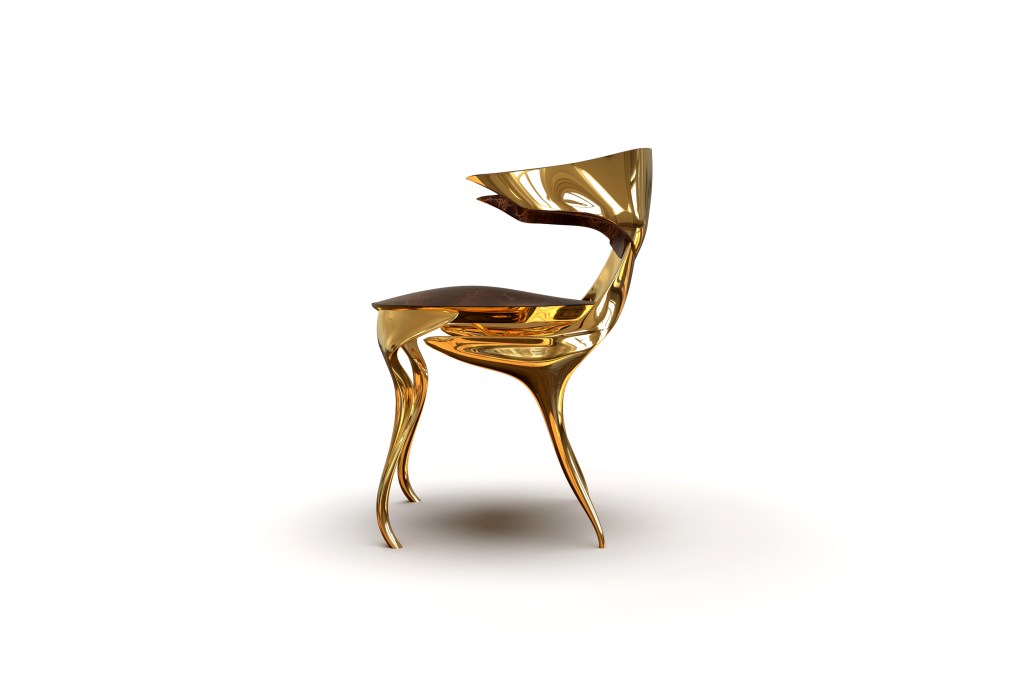
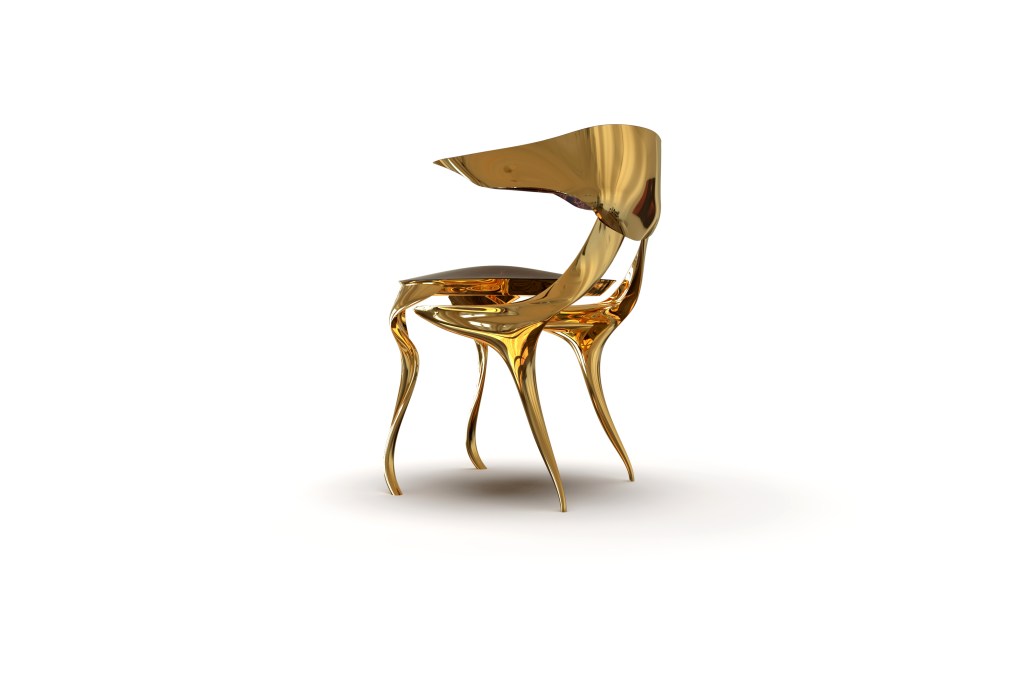
Marc Ange present furniture design that is so stunning that we simply can’t take our eyes off of it. ‘Il Pavone’ pays homage to the bird and its mesmerizing colors.
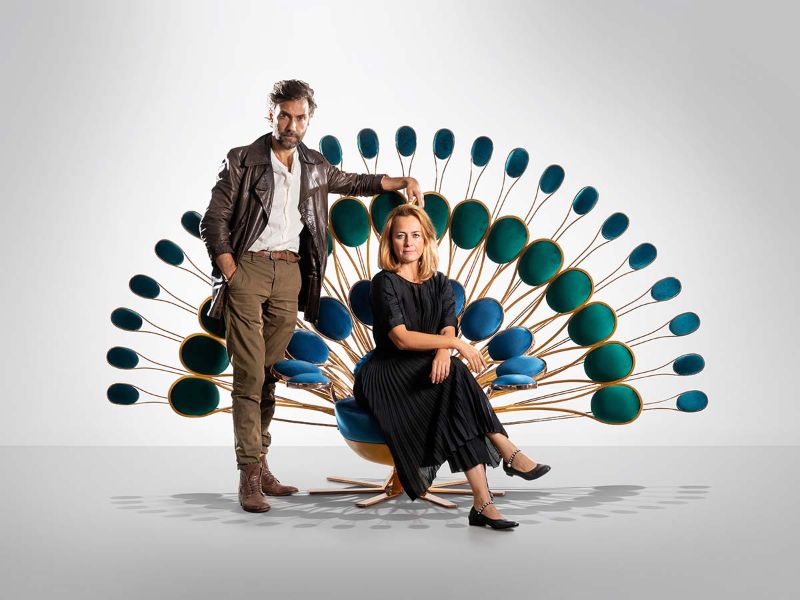
Inspired by his recent voyage to India, designer Marc Ange has conjured a dazzling suite of chairs that take cues from one of the subcontinent’s most captivating species: the peacock.
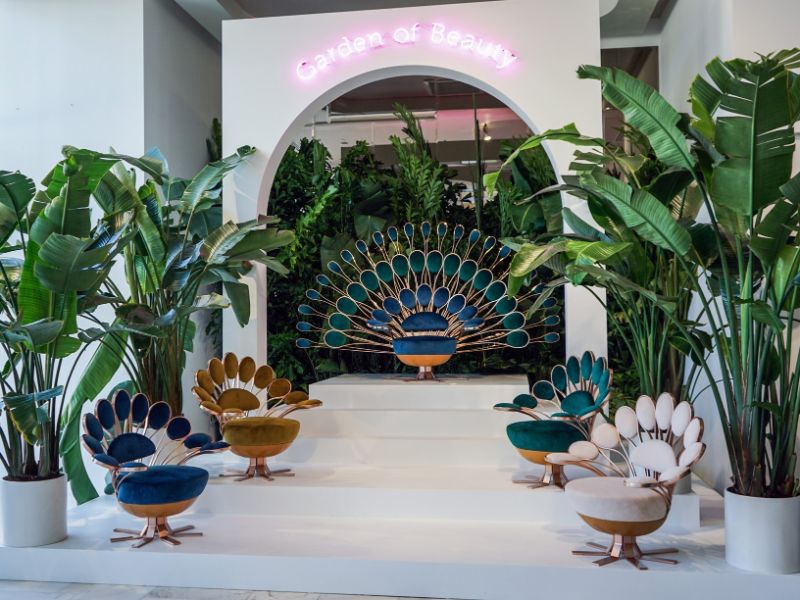
Timed with Art Basel in Miami Beach and Design Miami, the unveiling of the six-piece Il Pavone capsule collection takes over Visionnaire’s recently revamped Miami showroom.
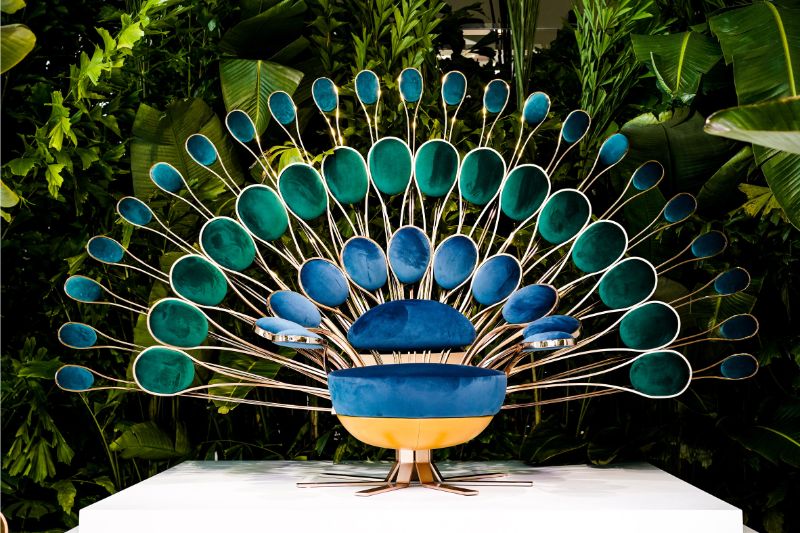
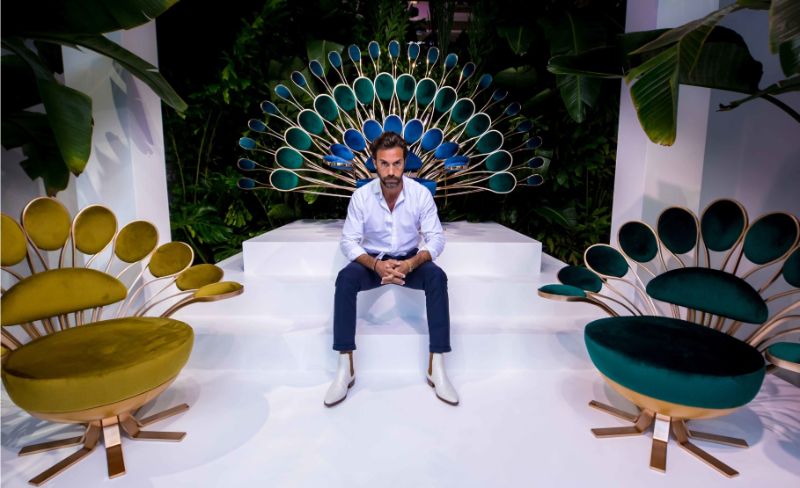
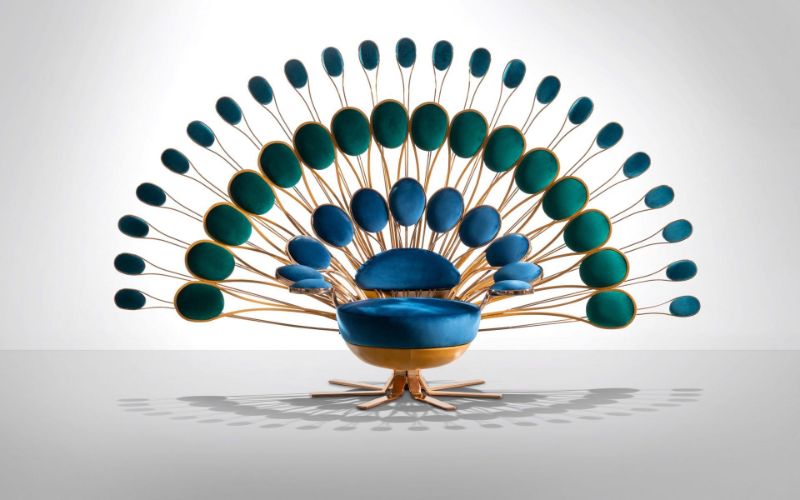
The collection, called “il pavone”, pays homage to the “bestiary” of the ancient world with models created in the image of the peacock. Its namesake piece, a limited edition throne, is described as a ceremonial chair that “explores the idea of seduction without compromise”.
“This collaboration presented the perfect opportunity to celebrate our anniversary, by showcasing a body of work that highlights the indispensable values Visionnaire is founded upon,” (…) “Culture, nature, design, object, experience, contamination, uniqueness, ingenuity, luxury, vision… these are the programmatic terms that represent our entrepreneurial spirit. Il pavone, and it’s meticulously thought out intricacies and innuendos, will encapsulate these principles, and expose their true significance through a narrative and sensory experience.”
Says Eleonore Cavalli, Artistc Director of Visionnaire.
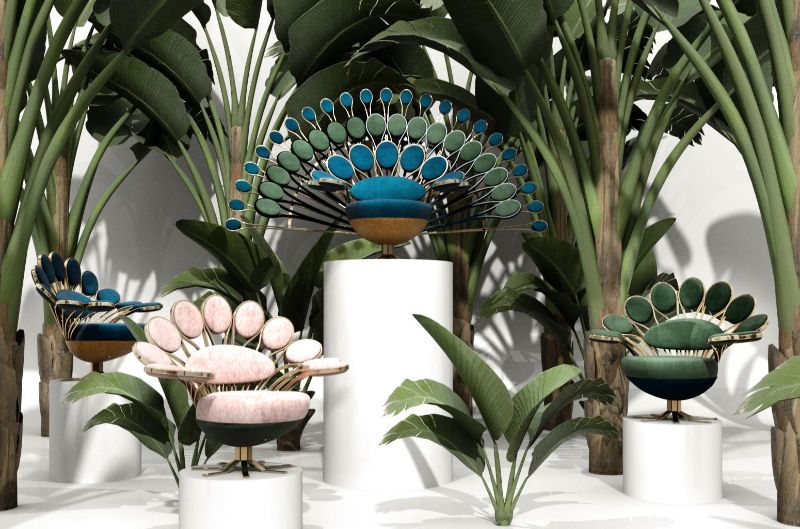
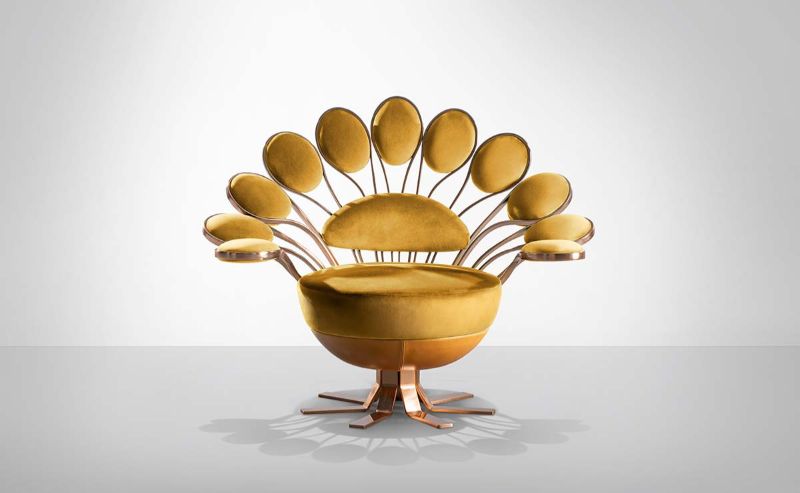
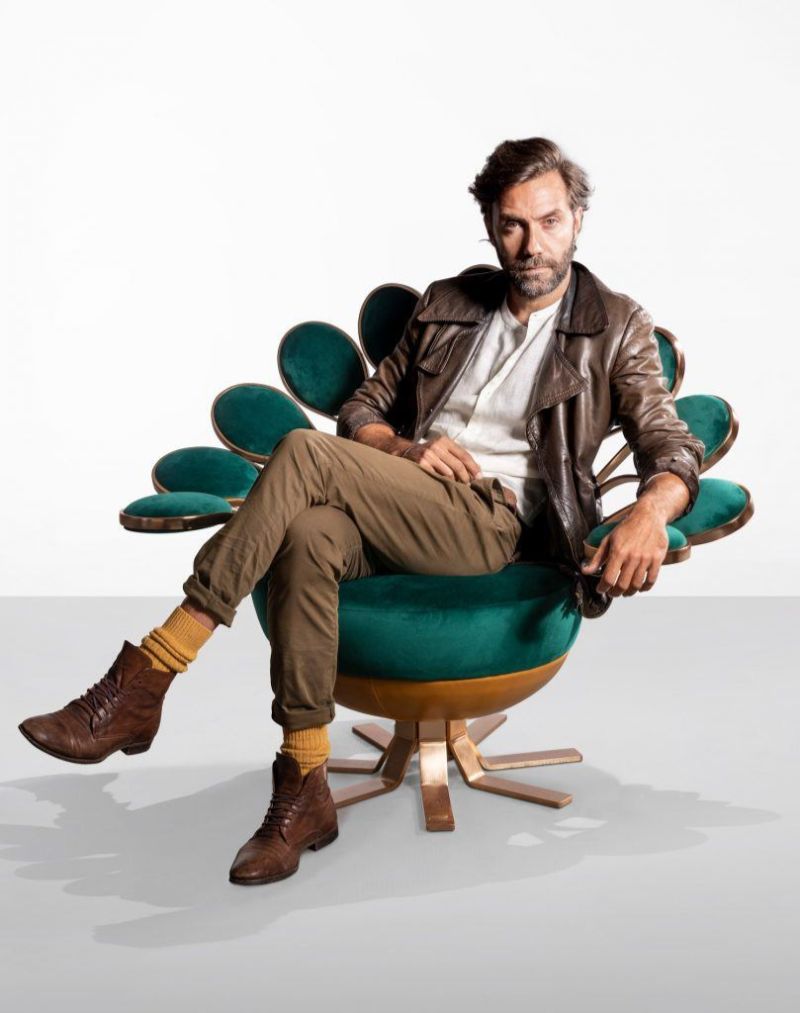
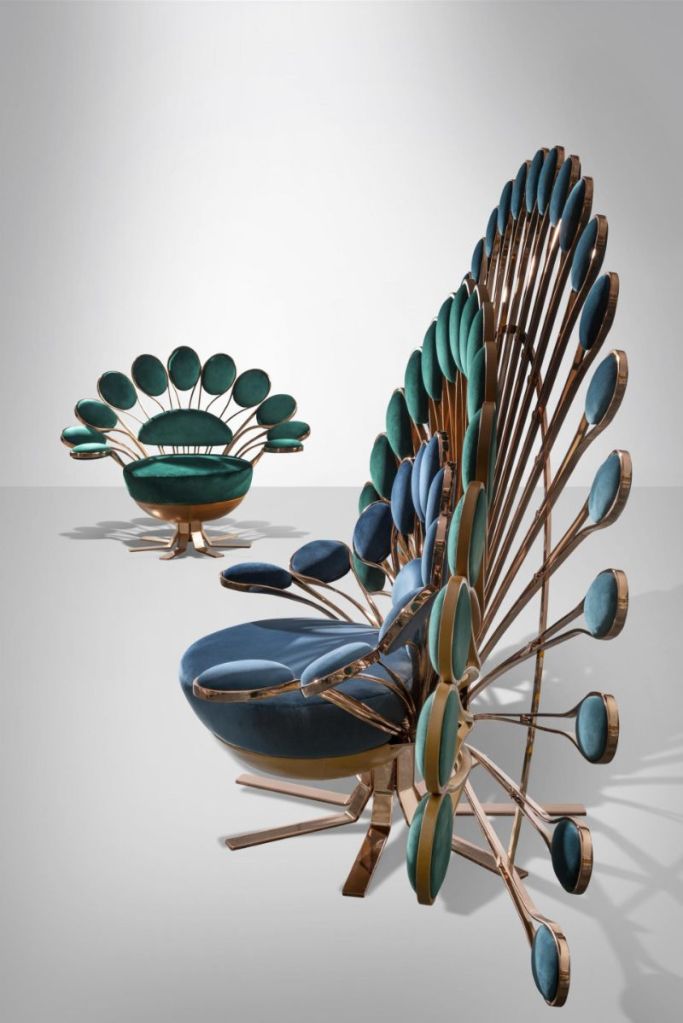
It uses 70s vintage inspired camel leather, vibrant blue, and green custom Visionnaire fabrics, and brass coated in regal bronze plating. then there is the il pavone armchair, presented as a fleet of five, and an aesthetically conservative version of the solitaire throne.
The armchair shares the same fabrics seen in the throne, but with a more functional silhouette for domestic use.
A wonderful story unfolds around every turn in this contemporary classic hotel, whose iconic building is designed by SWA architects.
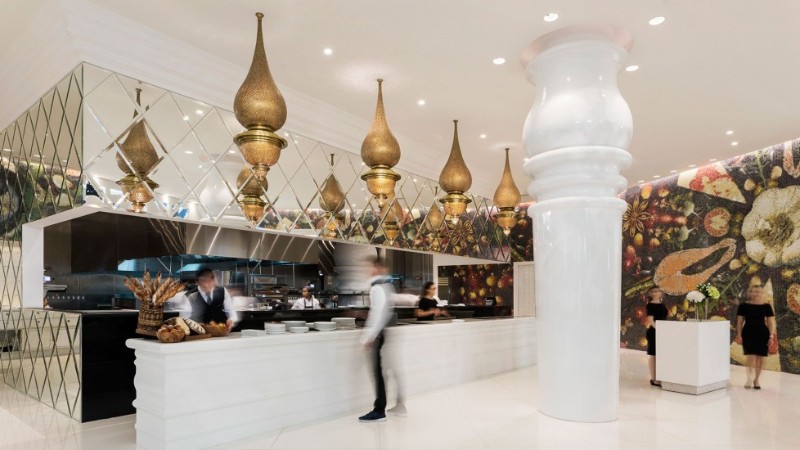
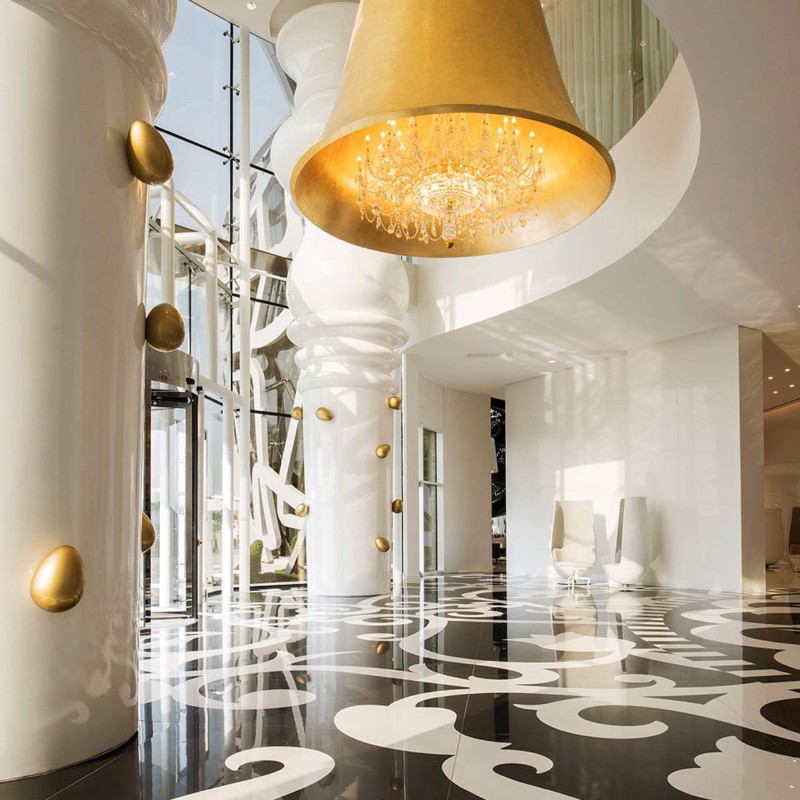
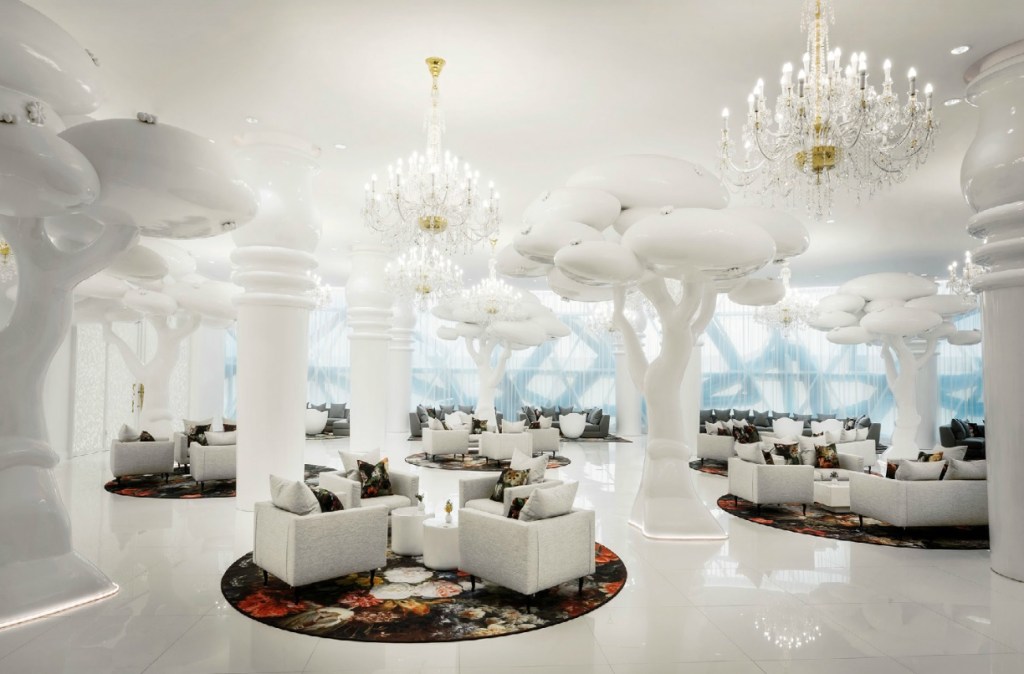
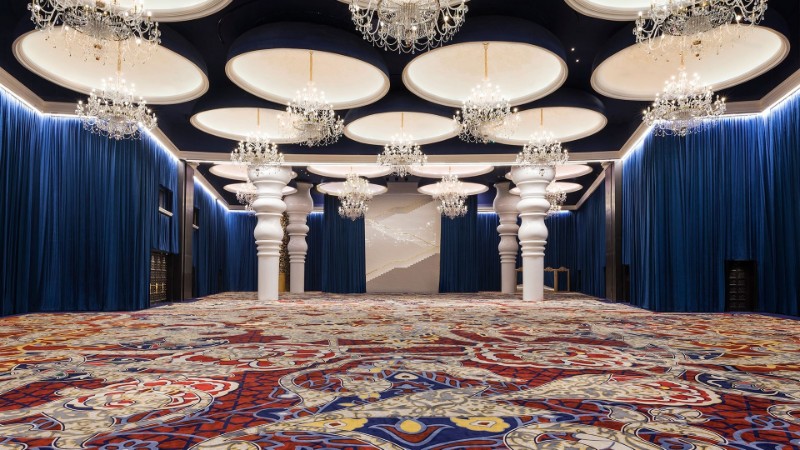
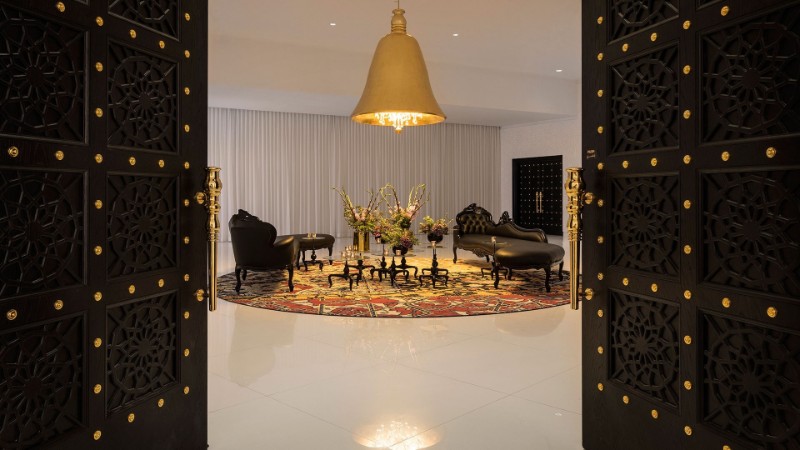
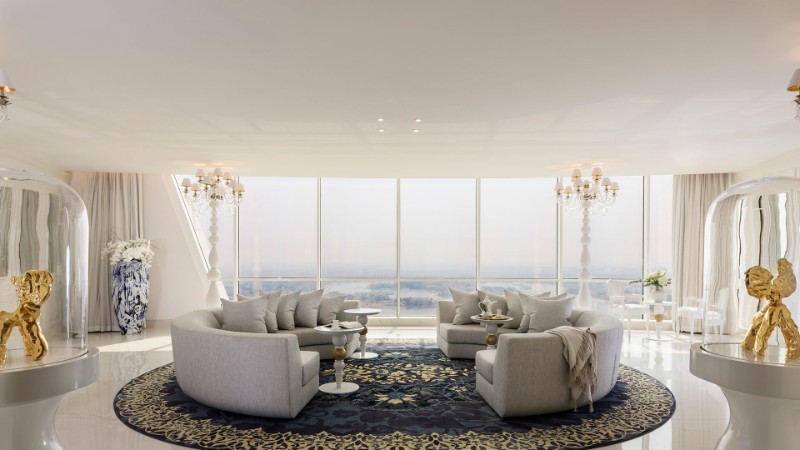
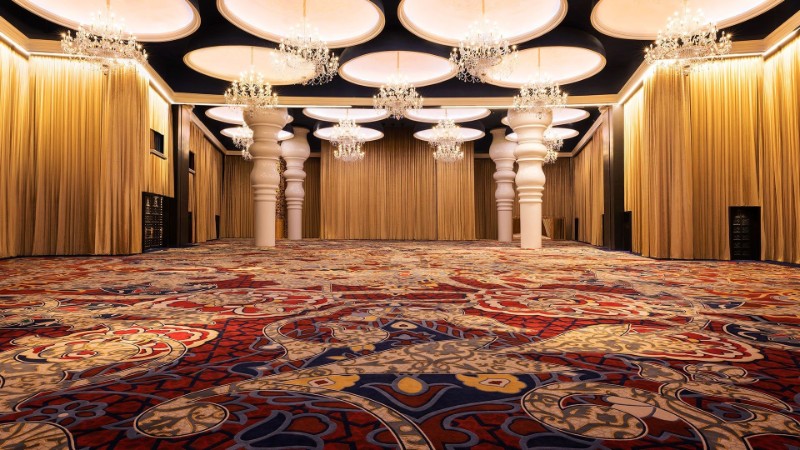
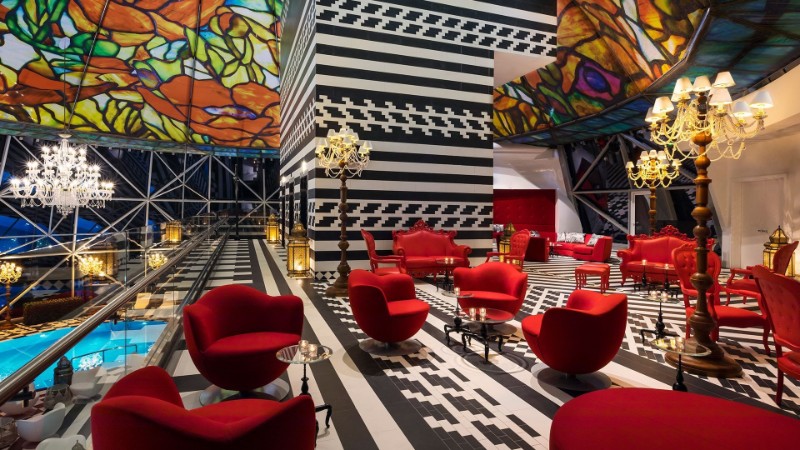
The Mondrian Doha in Qatar (2017) is a five-star destination designed by Marcel Wanders and operated by the global hospitality company SBE, drawing on local knowledge and exhibiting innovative materials and techniques.
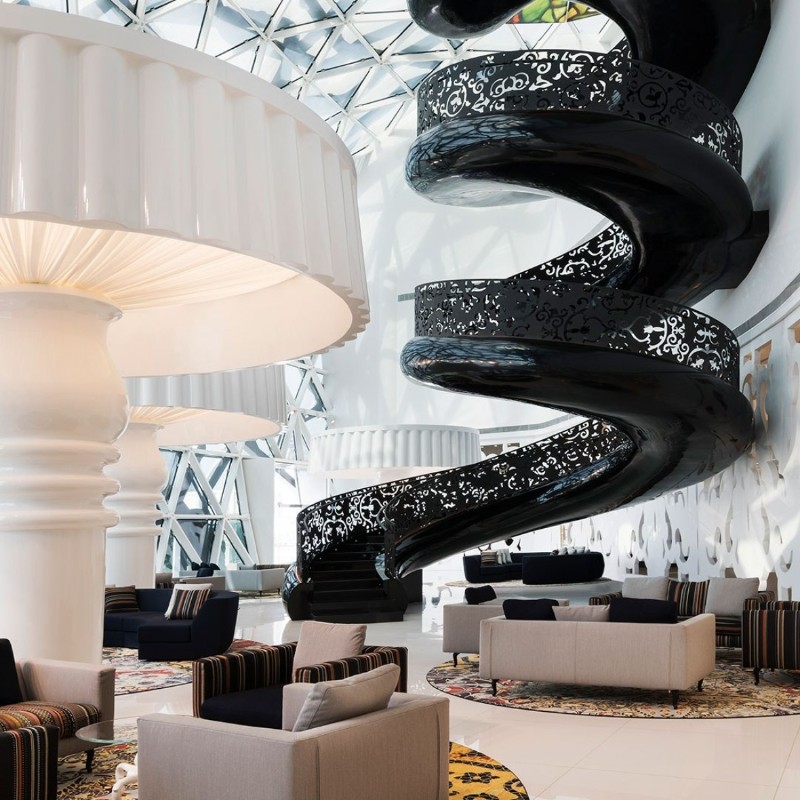
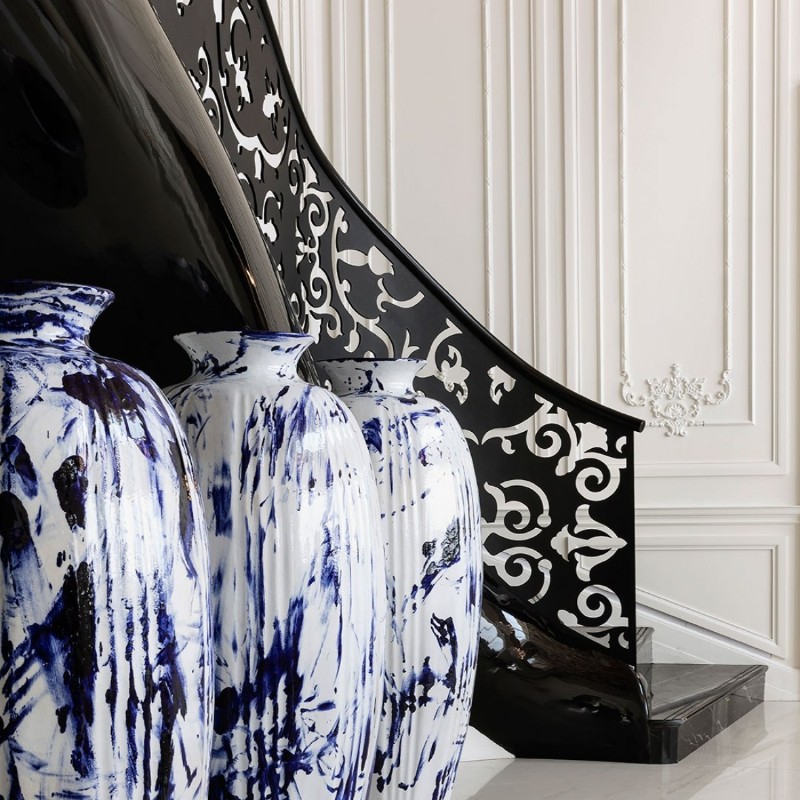
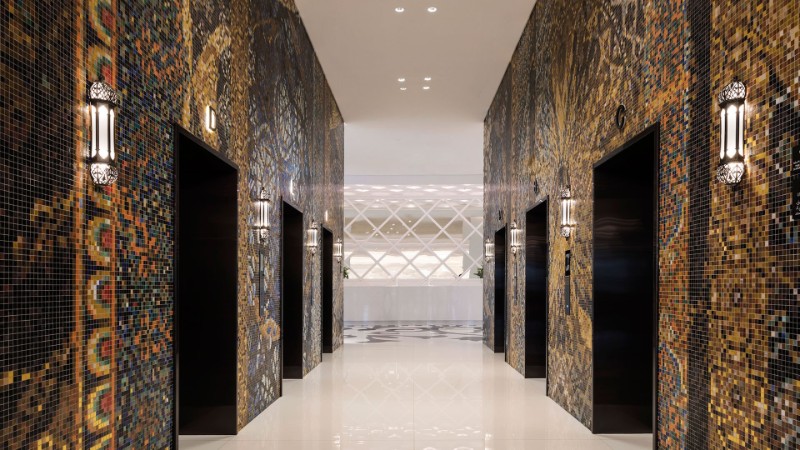
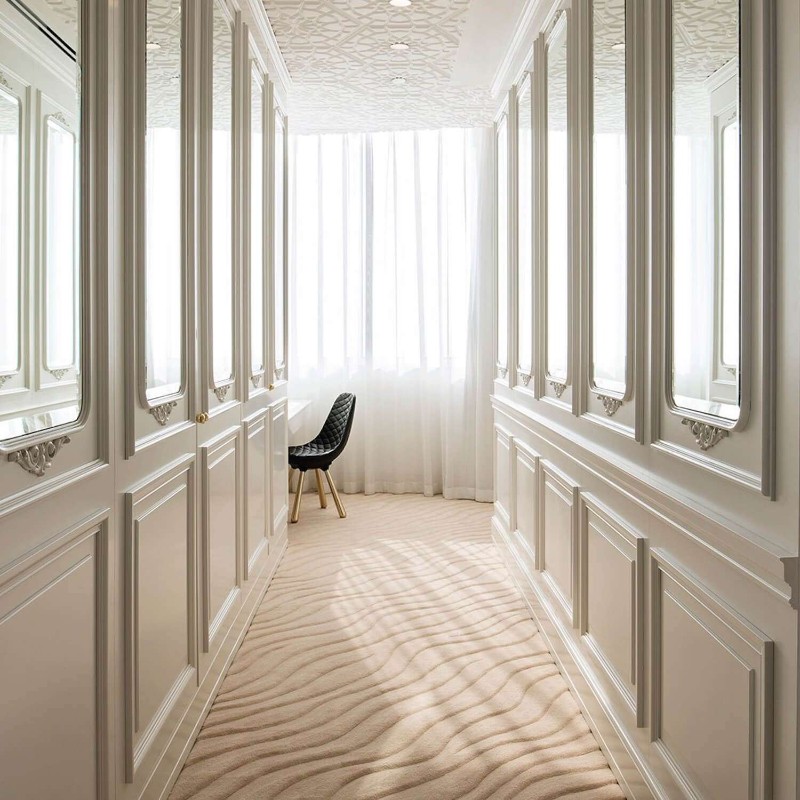
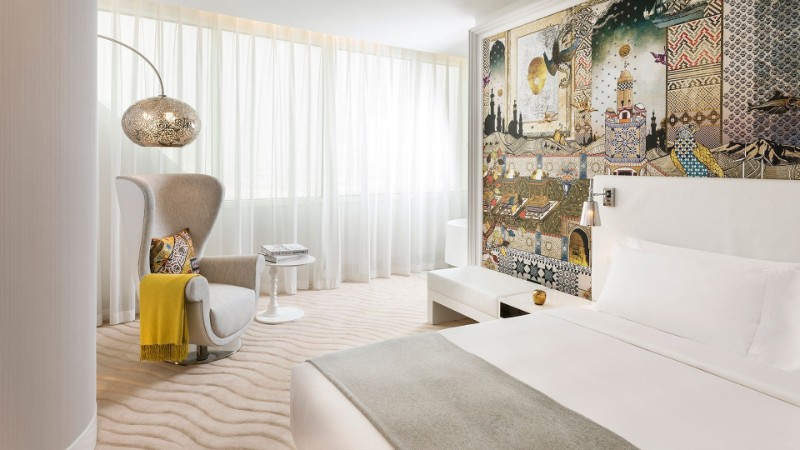
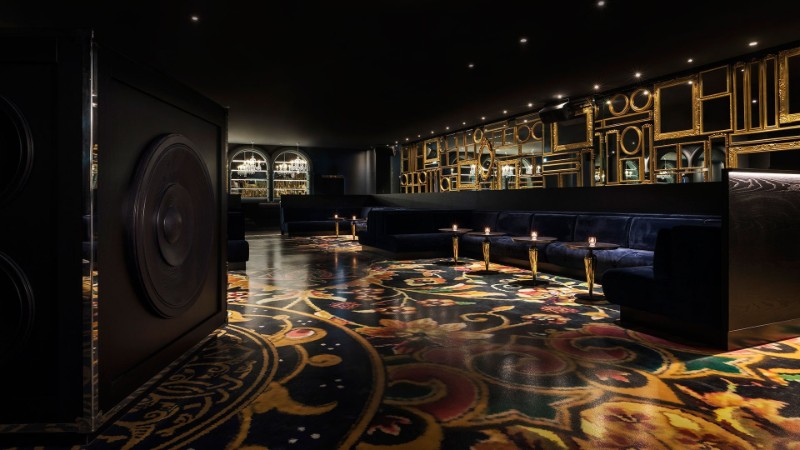
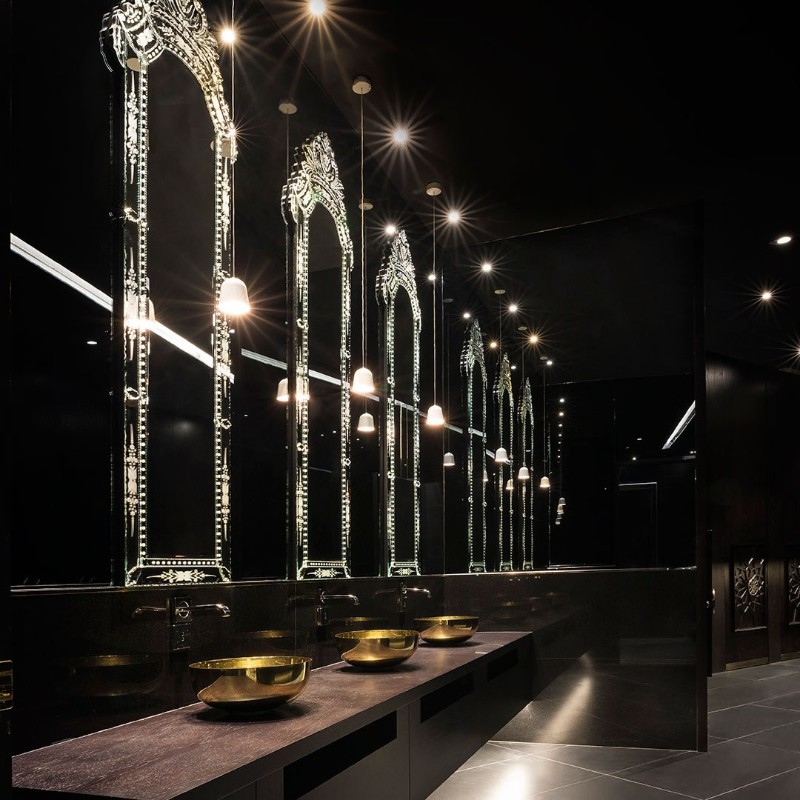
Each space possesses its own identity, allowing guests to form a collection of stories woven with a main theme that runs throughout. Marcel Wanders’ signature style spans from the hotel’s lobby and restaurants to its royal penthouses, VIP units, suites, premium and standard rooms. Bespoke designs reflect local patterns, Arabic writing and historic souks.
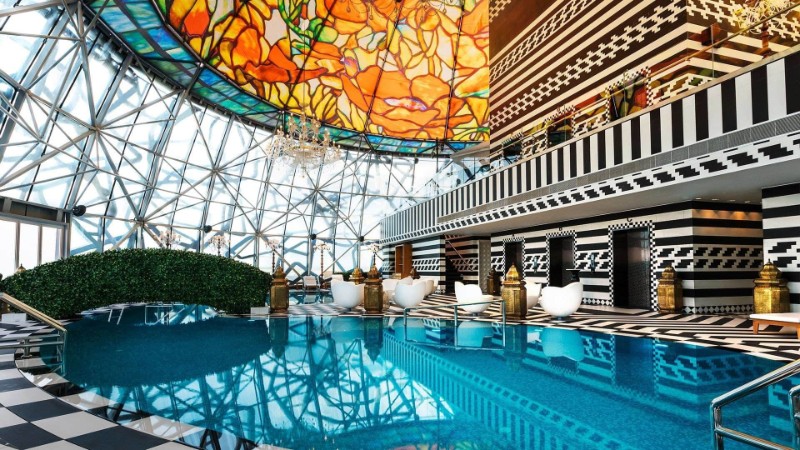
Giant columns with golden eggs, a ‘tree of life’ made of flowers, falcon video art, ornate stained glass and intricate mosaic tiling add to this most luxurious and holistic hotel experience.
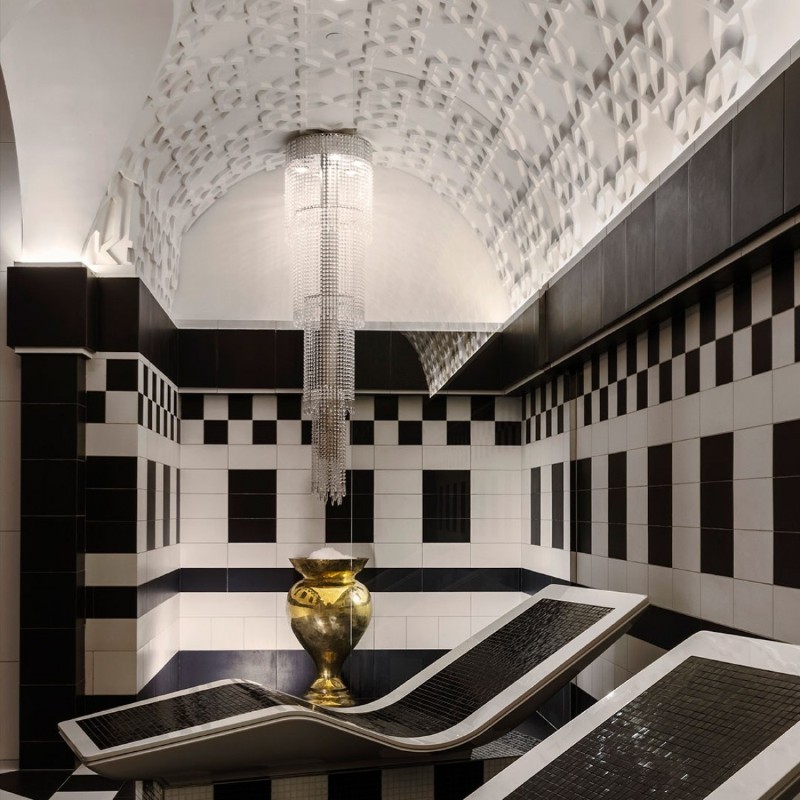
In addition to 270 rooms and suites with a luxury interior design, modern furniture pieces and extravagant spaces in his distinctive maximalist style, the top interior designer featured eight innovative bars and fine restaurants featuring both regional and international cuisine, an indoor/outdoor rooftop pool bar, ultra-modern meeting and conference venues and a world-class spa. Mondrian Doha, as one of the best hotels in Qatar, offers a variety of stylish and unique options for meetings and special events.
“For the design of Mondrian Doha and everything we do, the locale is super important,” explains Marcel Wanders. “To create the hotel, we studied the city, we studied the people. We don’t create interiors, we create destinations and Mondrian Doha is a destination in itself that needs to be discovered.”
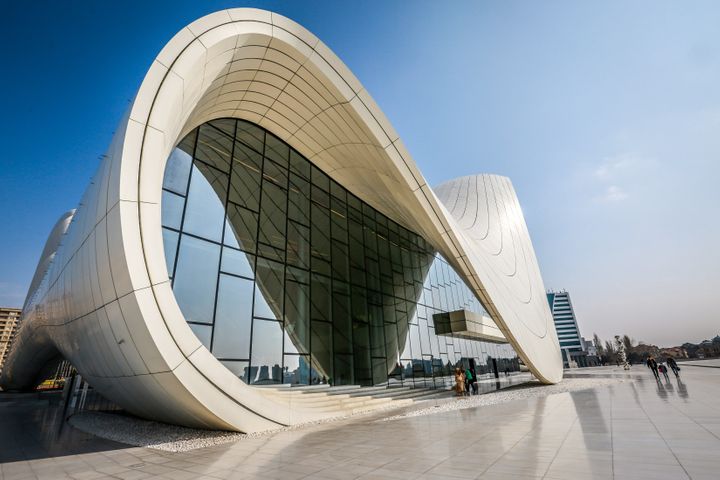
The Heydar Aliyev Center in Baku, Azerbaijan, was designed as a symbol of the country’s modernization and independence from the Soviet Union.
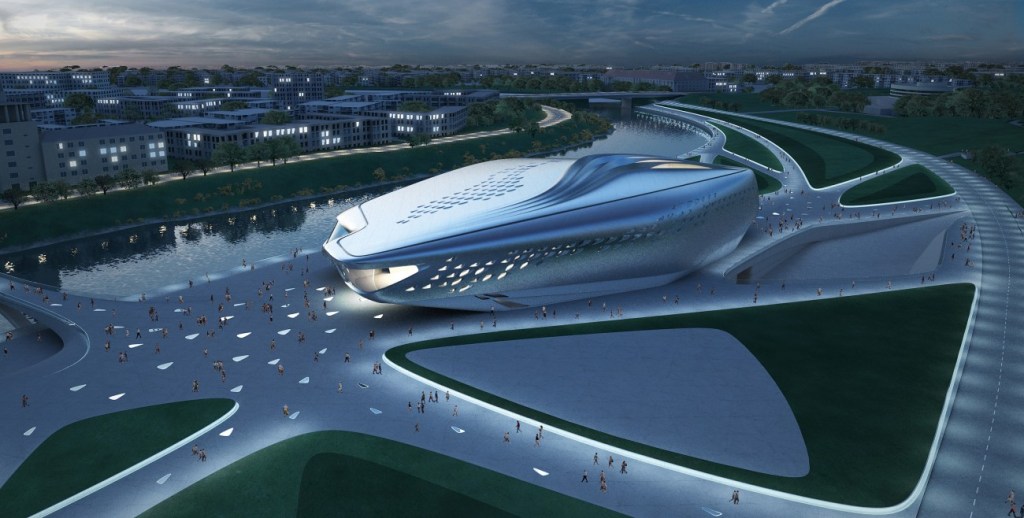
Zaha Hadid a distintive architect with an incredible legacy to the community. The architectural buildings of the designer are distinctively neo-futuristic, characterised by the “powerful, curving forms of her elongated structures” with “multiple perspective points and fragmented geometry to evoke the chaos of modern life”.
The Heydar Aliyev Center in Baku, Azerbaijan, was designed as a symbol of the country’s modernization and independence from the Soviet Union.
In this article, we’ll cover some both the architectural buildings signed by Zaha Hadid herself and the ones built later on, after her passing, by her architectural firm.
Vilnius Guggenheim Hermitage Museum
In 2010, Zaha Hadid was commissioned by the Iraqi government to design the new building for the Central Bank of Iraq. Other works include the Pierres Vives, the new departmental records building for French department Hérault, in Montpellier and the Heydar Aliyev Center, in Baku, Azerbaijan.
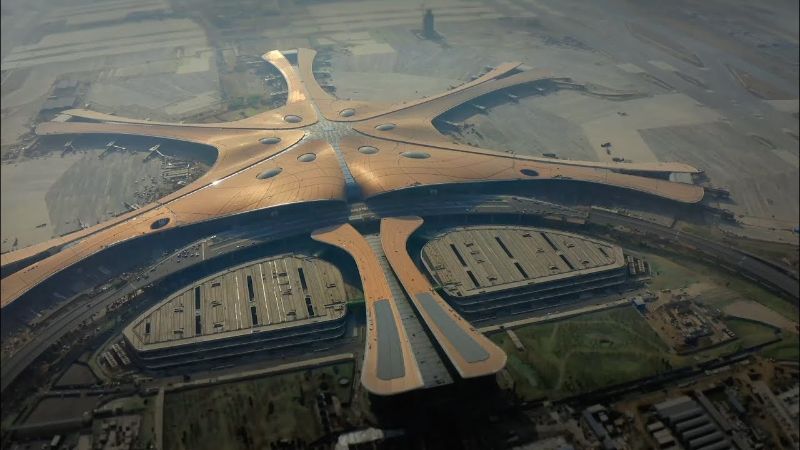
Beijing Daxing International Airport
Nowadays, Zaha Hadid Architects complete on a regular basis architectural buildings that are still embedded with the modern architect‘s view of contemporary design. Hard to choose only a few standouts, we decided to go with the most recent designs: the Leeza Soho skyscraper and the terminal building at Beijing Daxing International Airport.
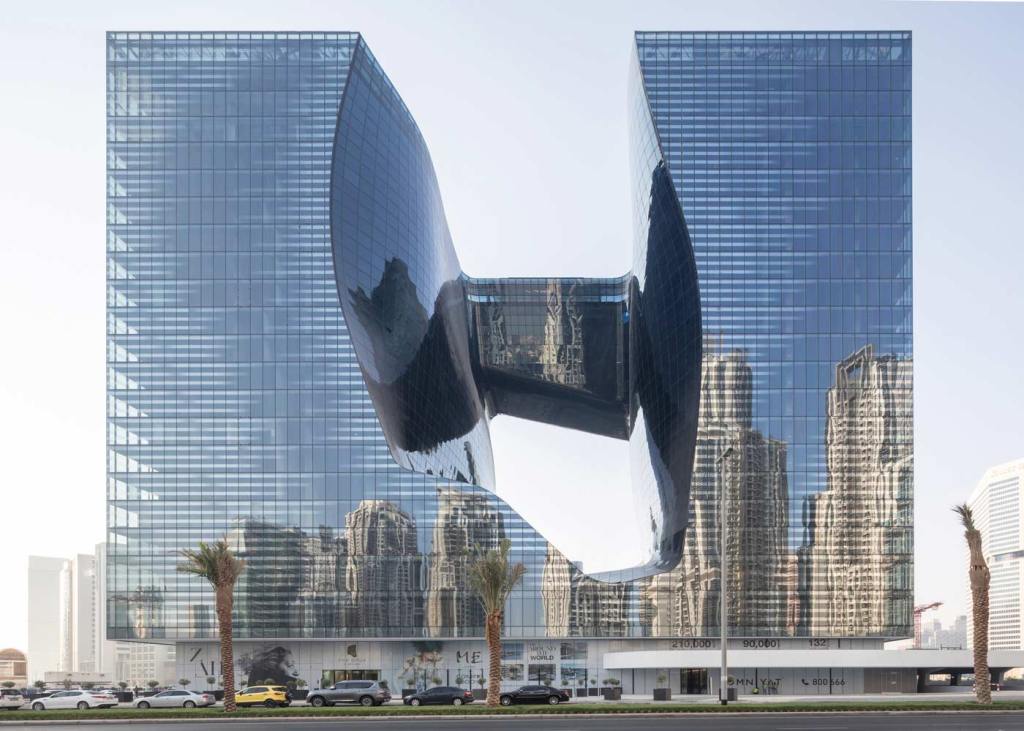
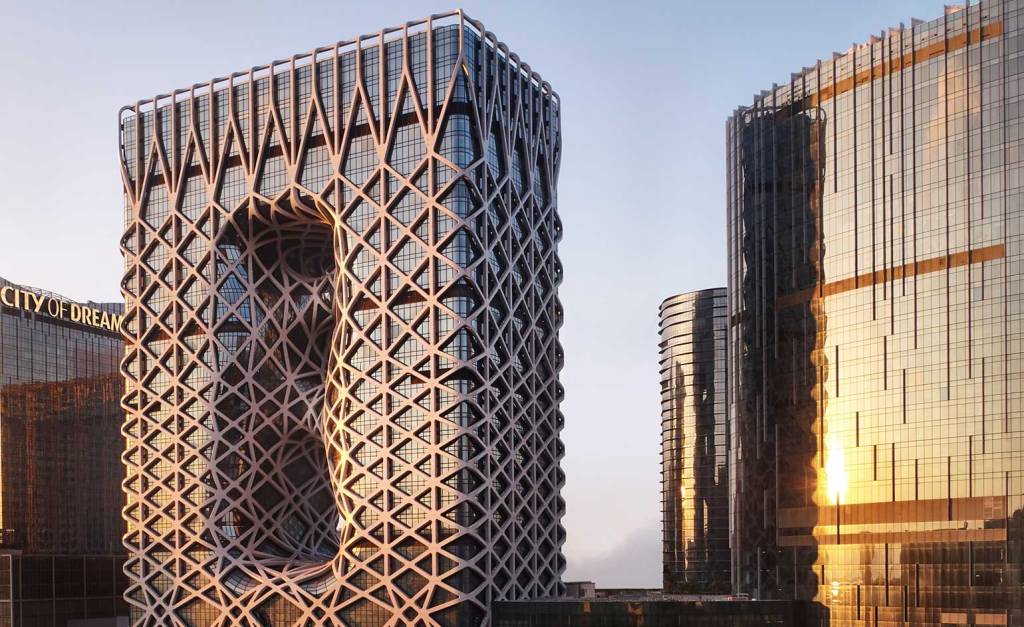
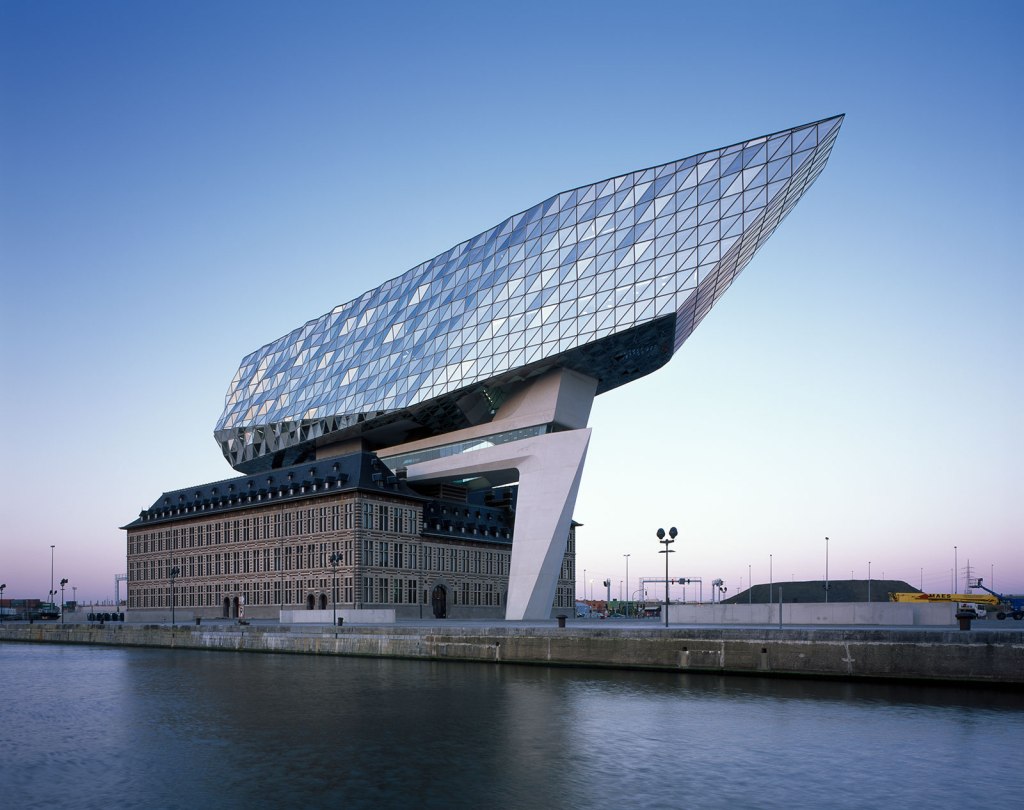
Opus, ME by Melia Dubai Hotel Morpheus Hotel Macau by Zaha Hadid Antwerp Port House
Zaha Hadid an creative genius that has granted the world with astonishingly curated buildings and products. The revolutionary creator will always be remembered for her distinctively neo-futuristic buildings, powerfully curvy and elongated creations.
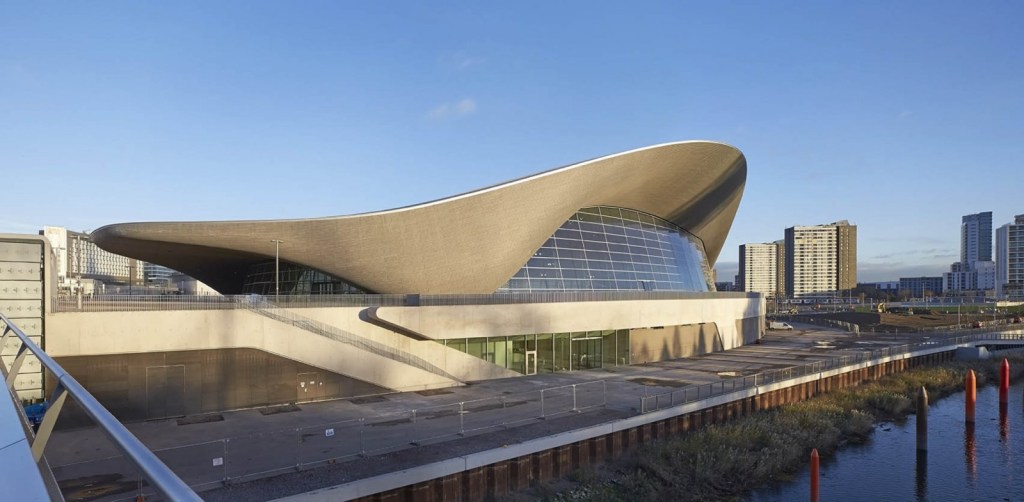
London Aquatics Centre – Domus
The legacy of Zaha Hadid will always live on forever! In each architectural project, the architect was able to create a unique expressive identity.
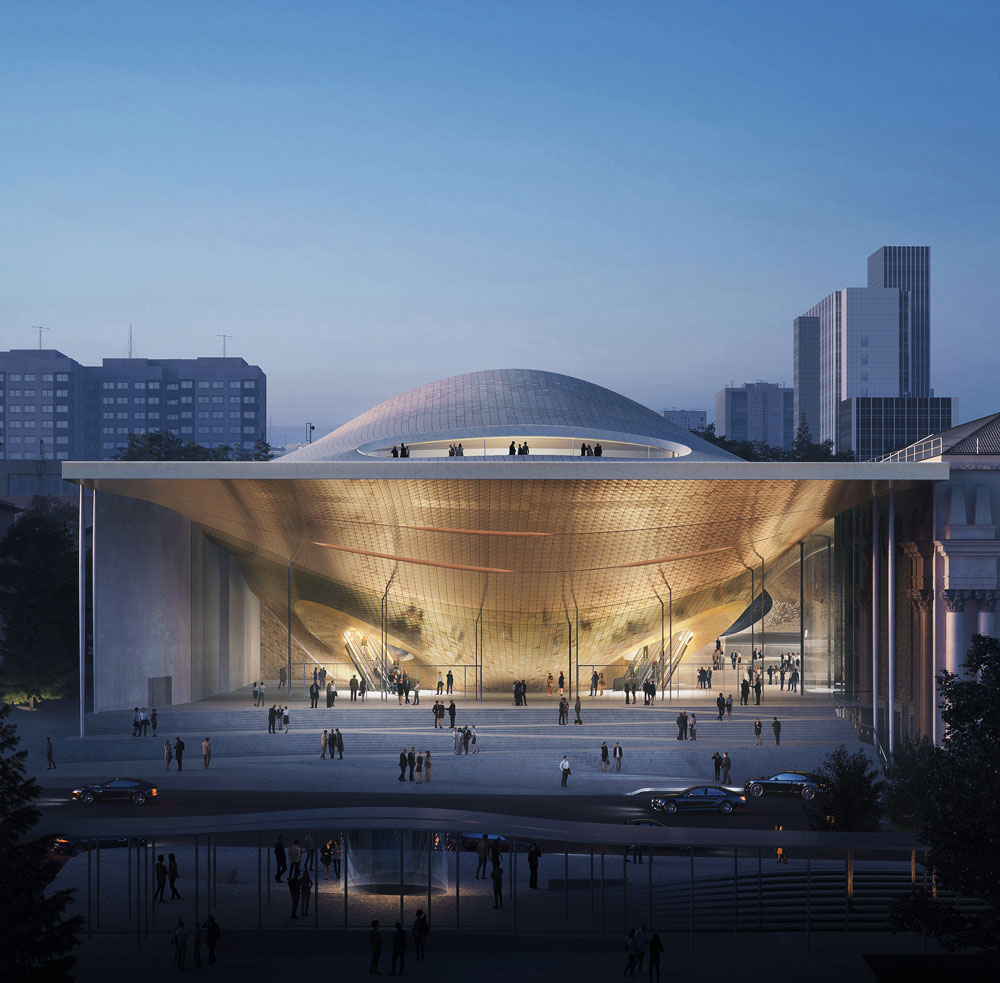
Sverdlovsk Philharmonic Concert Hall in Yekaterinburg (Russia)
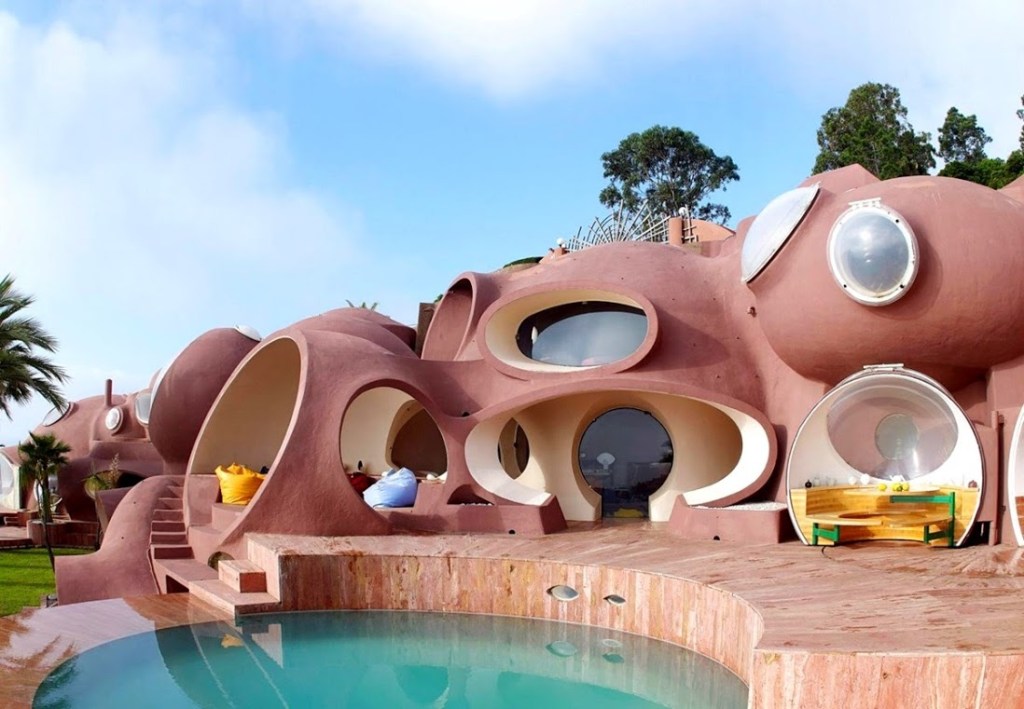
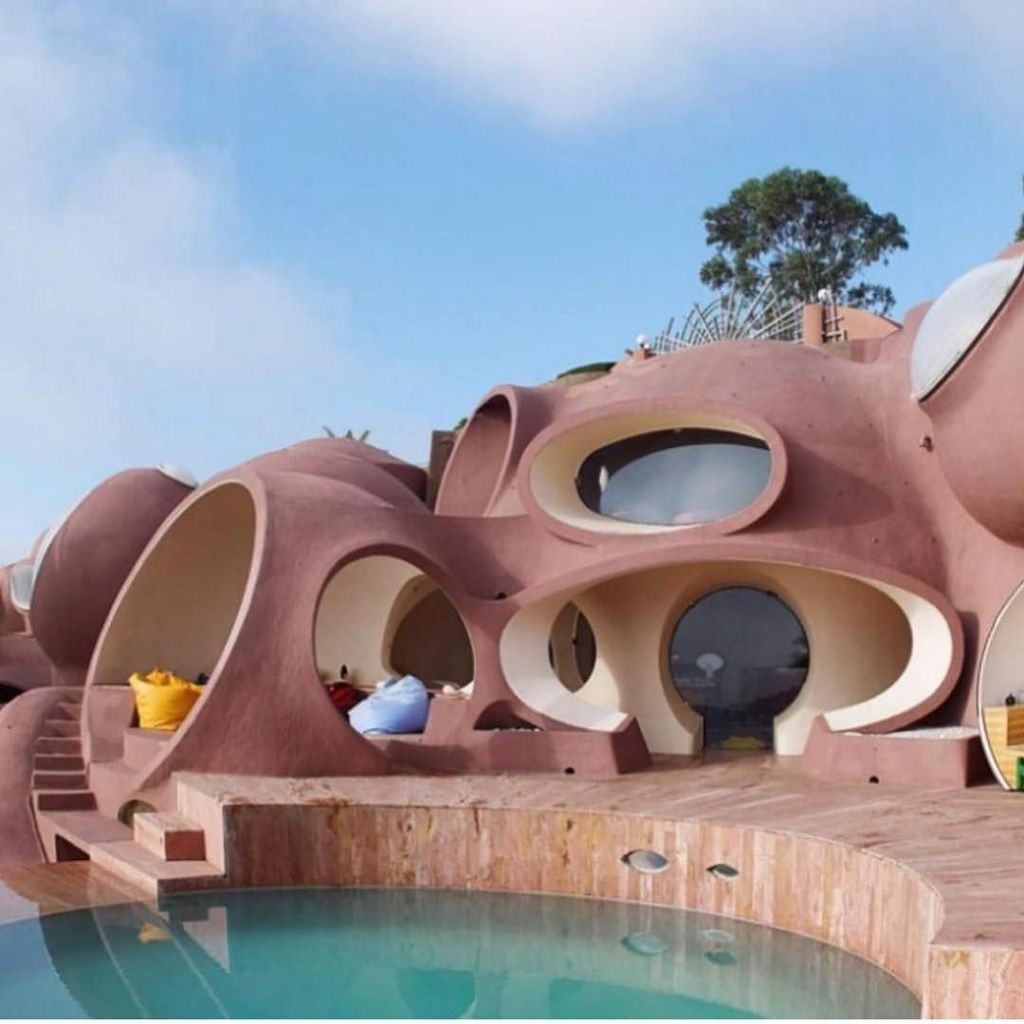
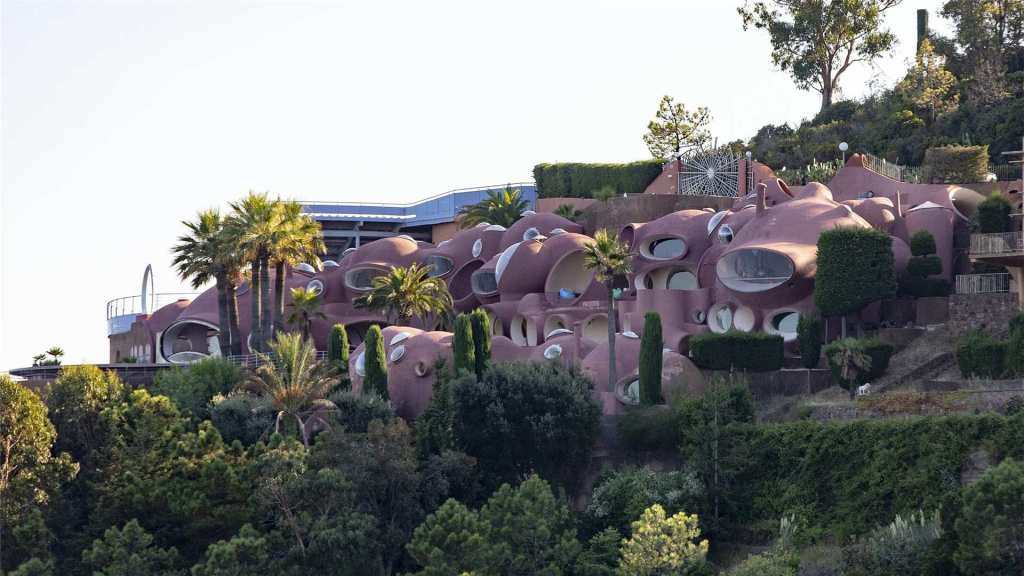
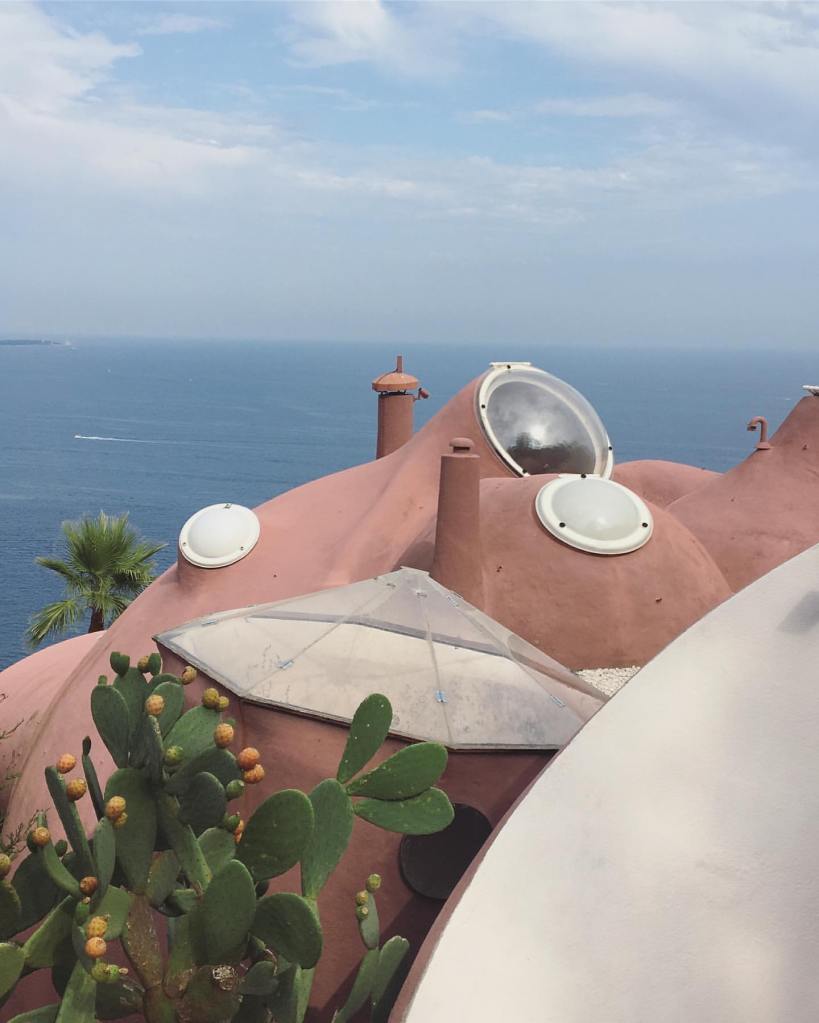
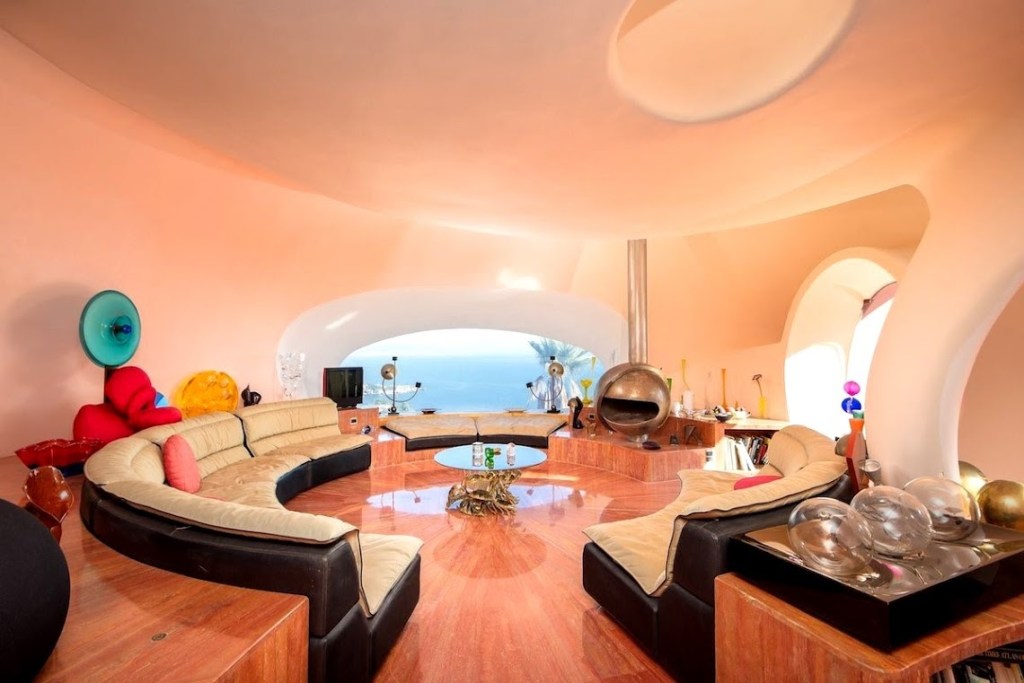
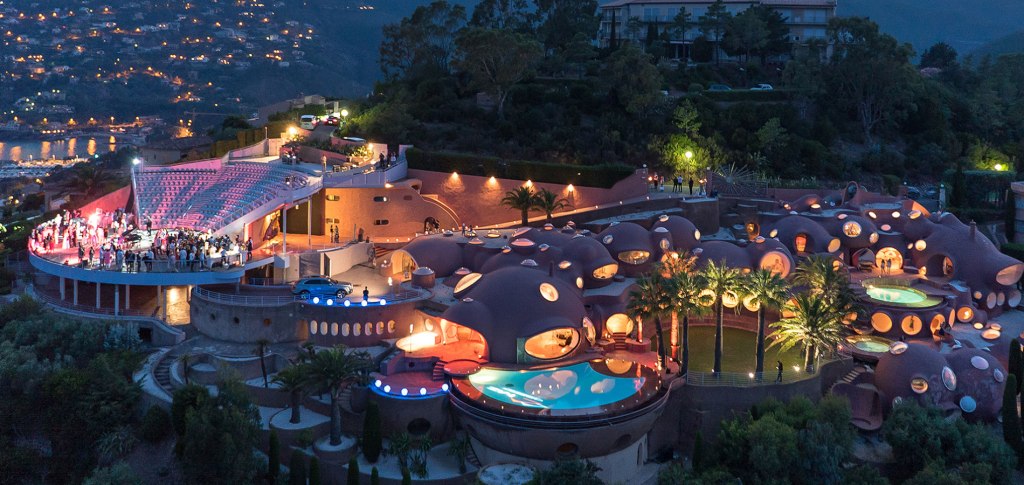
In 1992, Pierre Cardin, couturier and art patron, acquired Palais Bulles, built by Pierre Bernard in 1984. Working with Palais Bulles architect Antti Lovag, he went on to transform it into an astonishing “architectural folly”, the envy of the whole world.
“Clinging to the rocky Estérel, this palace has become my own bit of paradise. Its cellular forms have long reflected the outward manifestations of the image of my creations. It is a museum where I exhibit the works of contemporary designers and artists.”
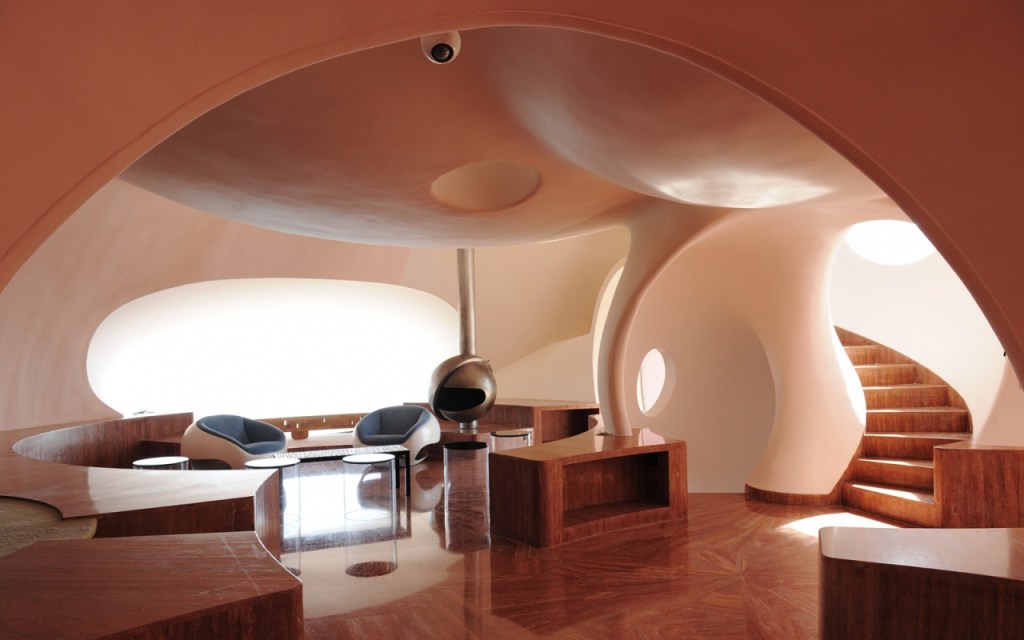
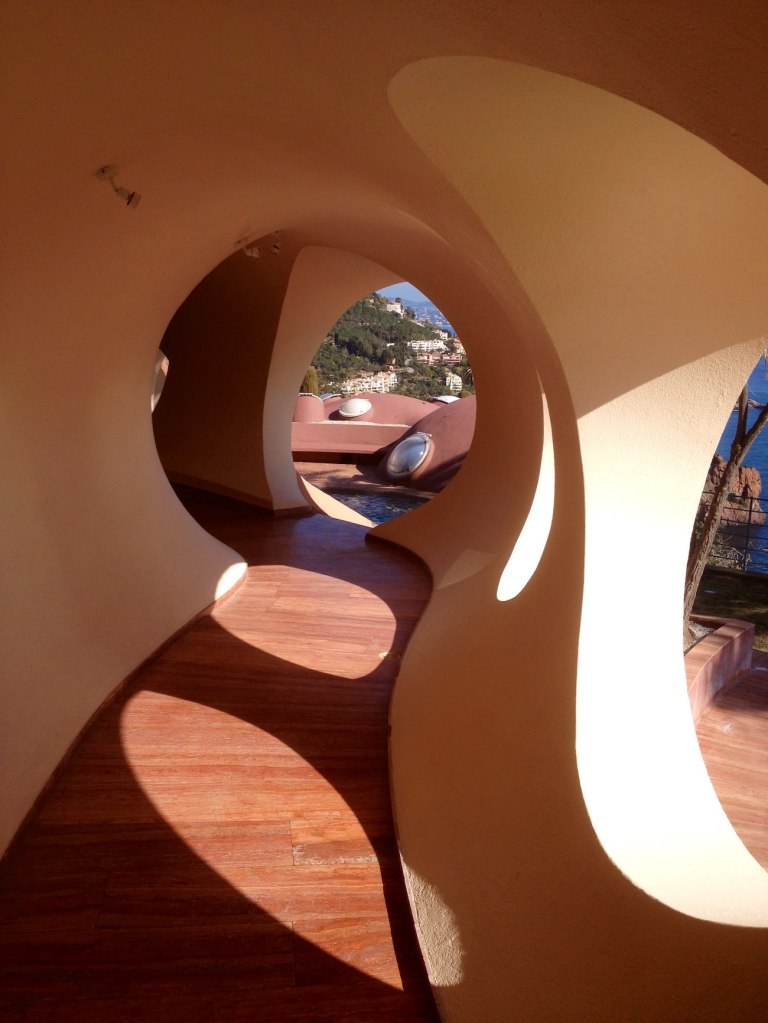
The Architect, Antti Lovag, defined himself, with gentle irony, as an “habitologist”, like some swashbuckling DIYer. In his dreams, everything was to be round, smooth, and soft, helping bodies, ideas, and feelings to flow freely.
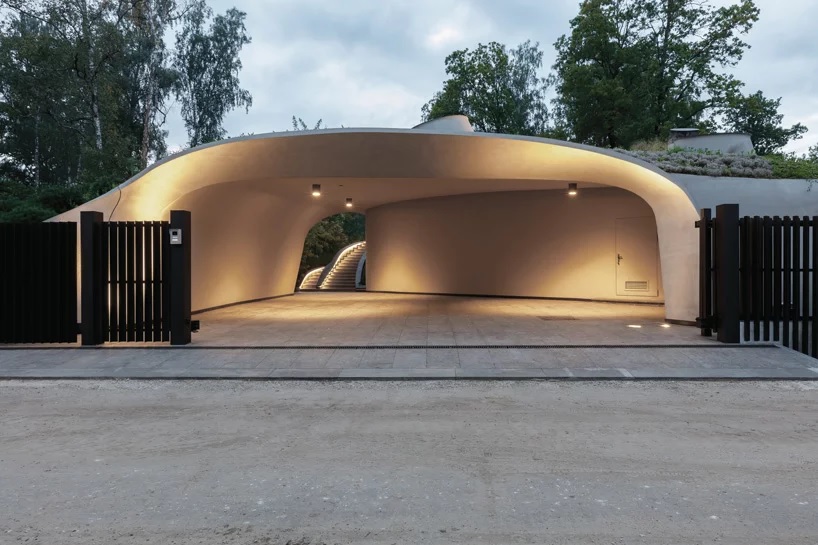
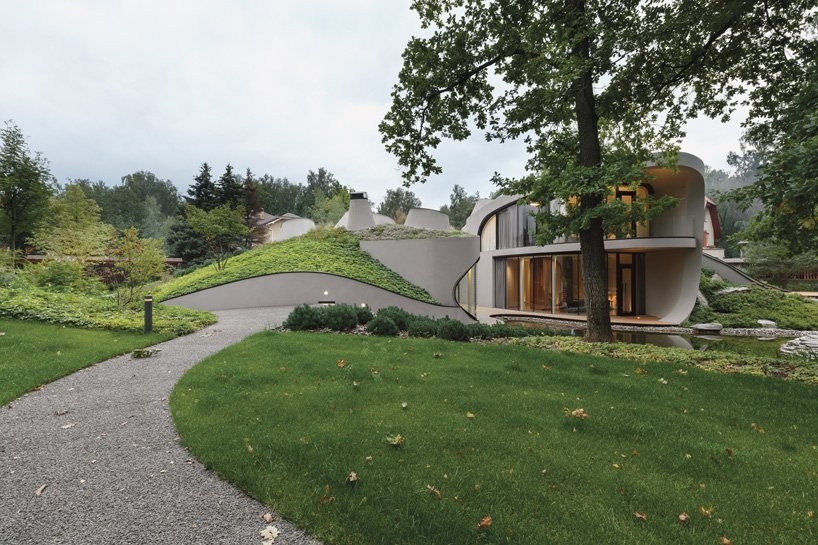
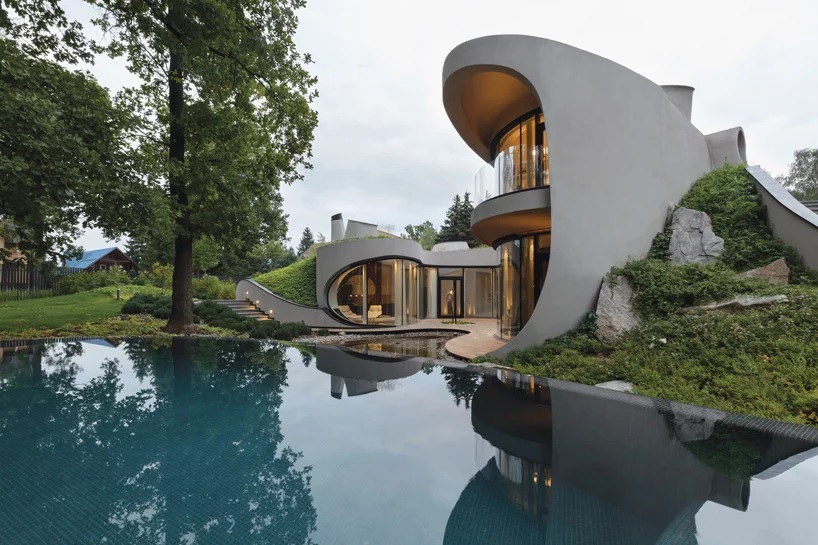
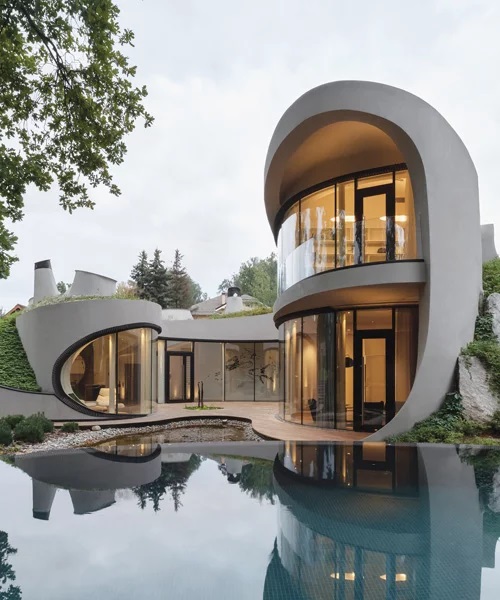
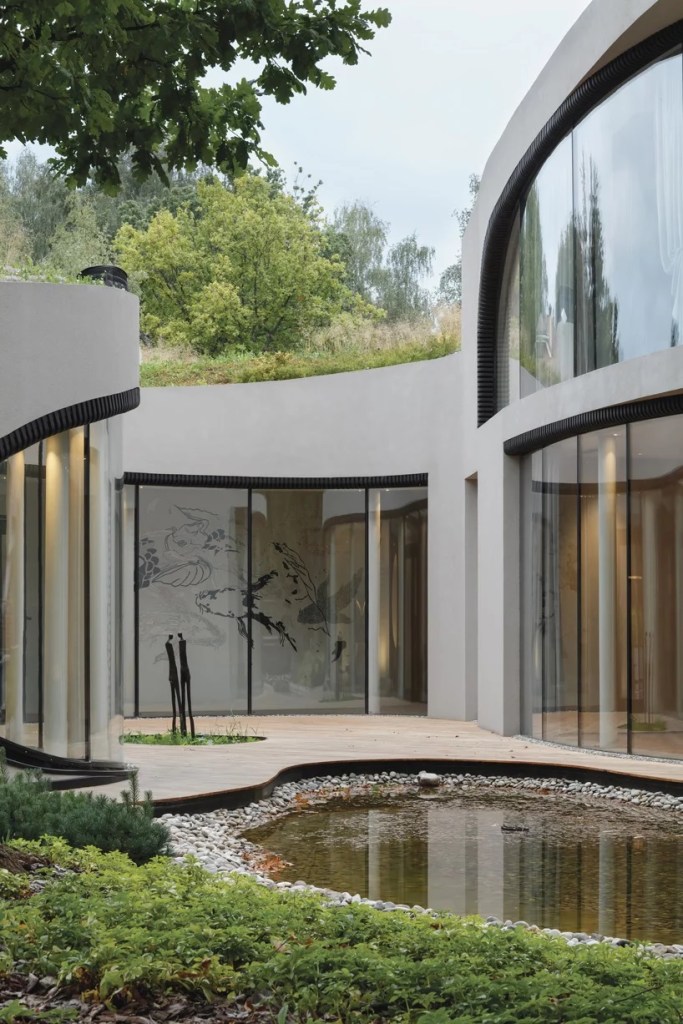
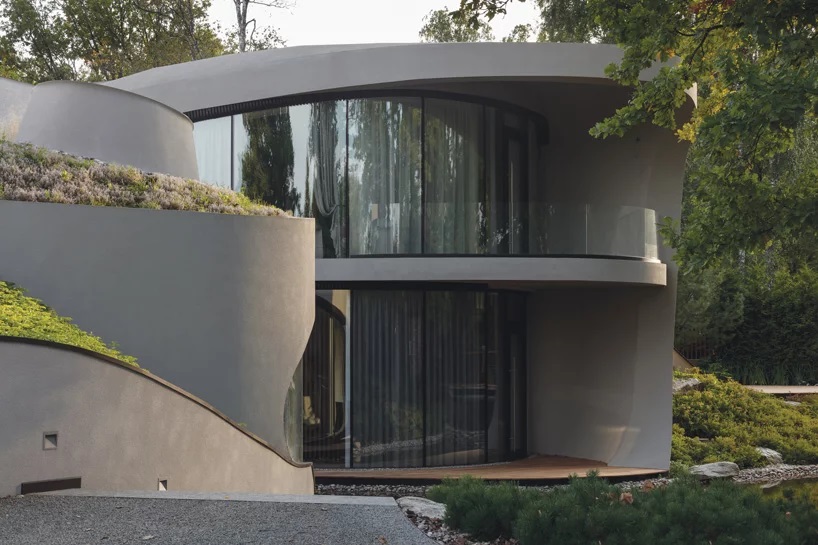
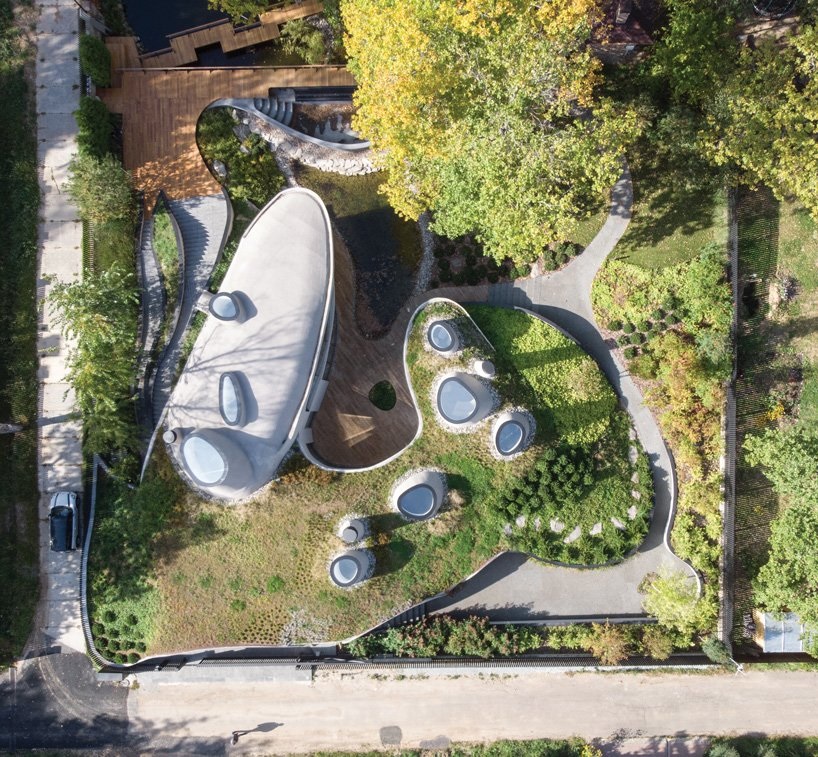
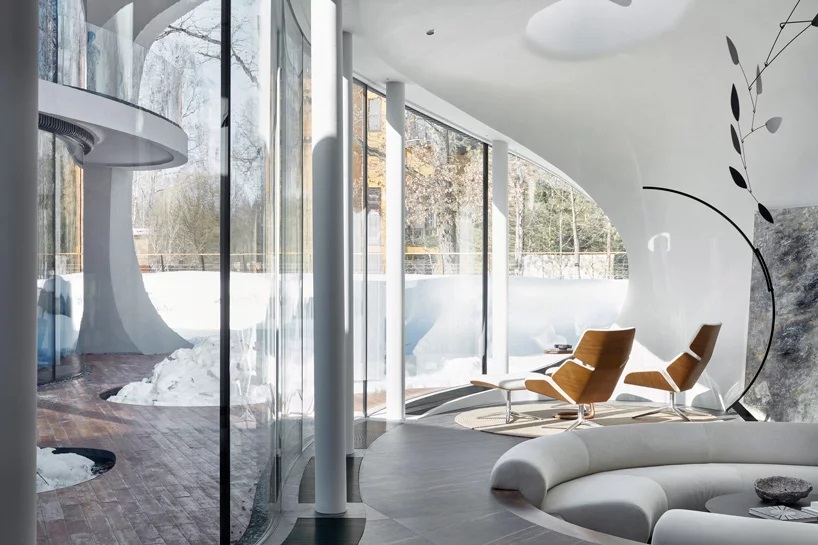
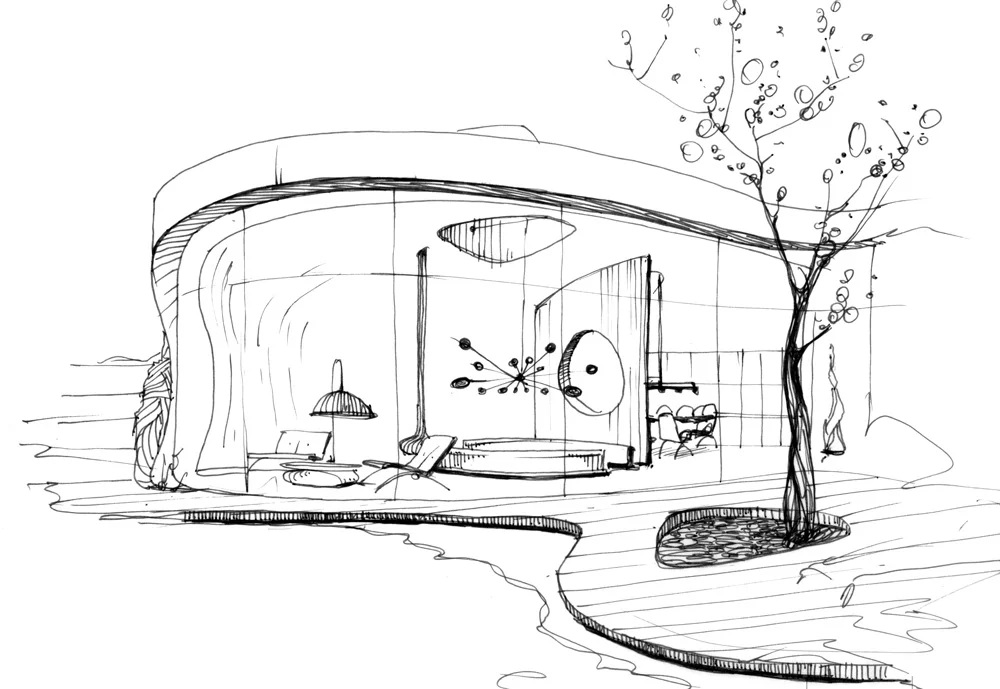
Developed from the outside in, the house is interconnected with the exterior space, forming a continuity of mutual flow of the landscape into the building, and the building into the landscape, enhanced by a green roof, on which a garden with woody and herbaceous plants is organized.
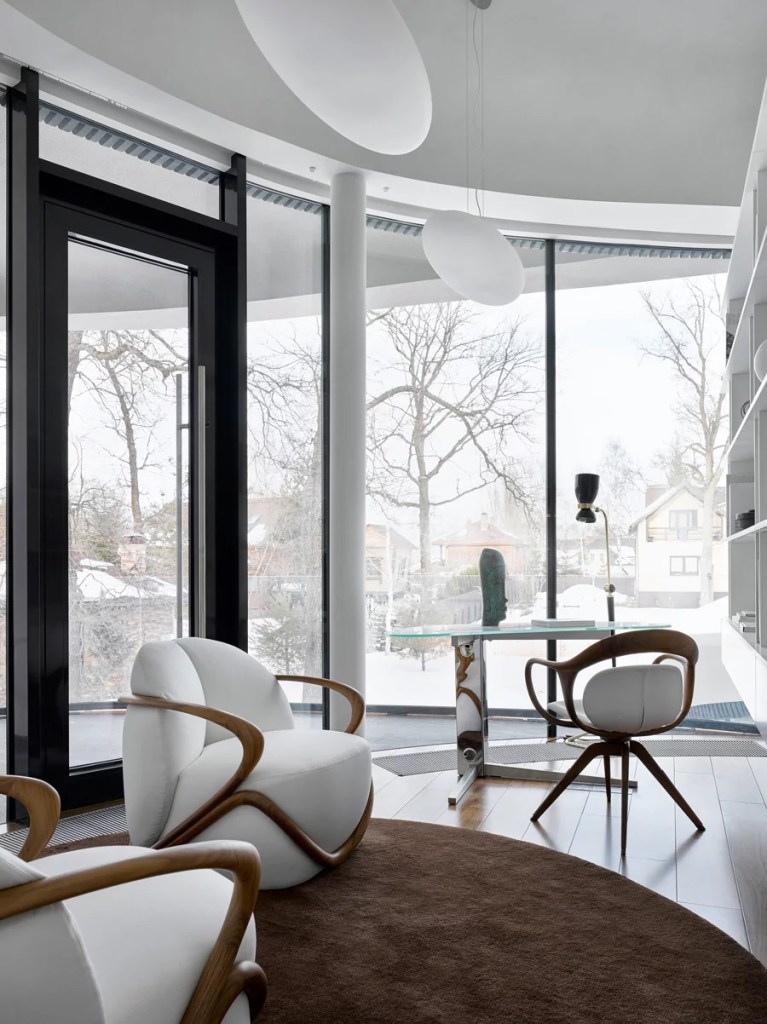
This project with an organic architecture, futuristic residence integrated into an artificial landscape on a village outside Moscow.
‘As a result of the inexpressive environment, the fundamental concept base was the integration of the building into an artificially-created landscape and the inextricable connection of architecture with the open courtyard site structure,’ explains Niko Architect.
‘The composition of architecture is developing freely,’ adds the studio. ‘the idea of functional expediency, based on the harmonious “adaptation” of the project to the conditions of its existence and purpose, prevails.’
As in a living organism, every element within the project is well balanced and connected to the whole, such as the external space, which is interwoven with the house’s inside.
The outside environment is achieved with a series of circular skylights within the building, which are oriented to the movement of the sun and bring in plenty of natural air and light within the interior.
Niko Architect has organized the interior based on the principle of integrating the ‘home gallery’ into the living space, utilizing the building frame as a backdrop for decor and art, sculptures, decorative elements with hidden Japanese themes and symbolic forms.
The open area also has a round, almost closed shape and is the compositional core of the interior, symbolizing two balanced halves – yin and yang. lighting is organized not only from a functional point of view, but is also the part of organic architecture, emphasizing the architectural features of the building.
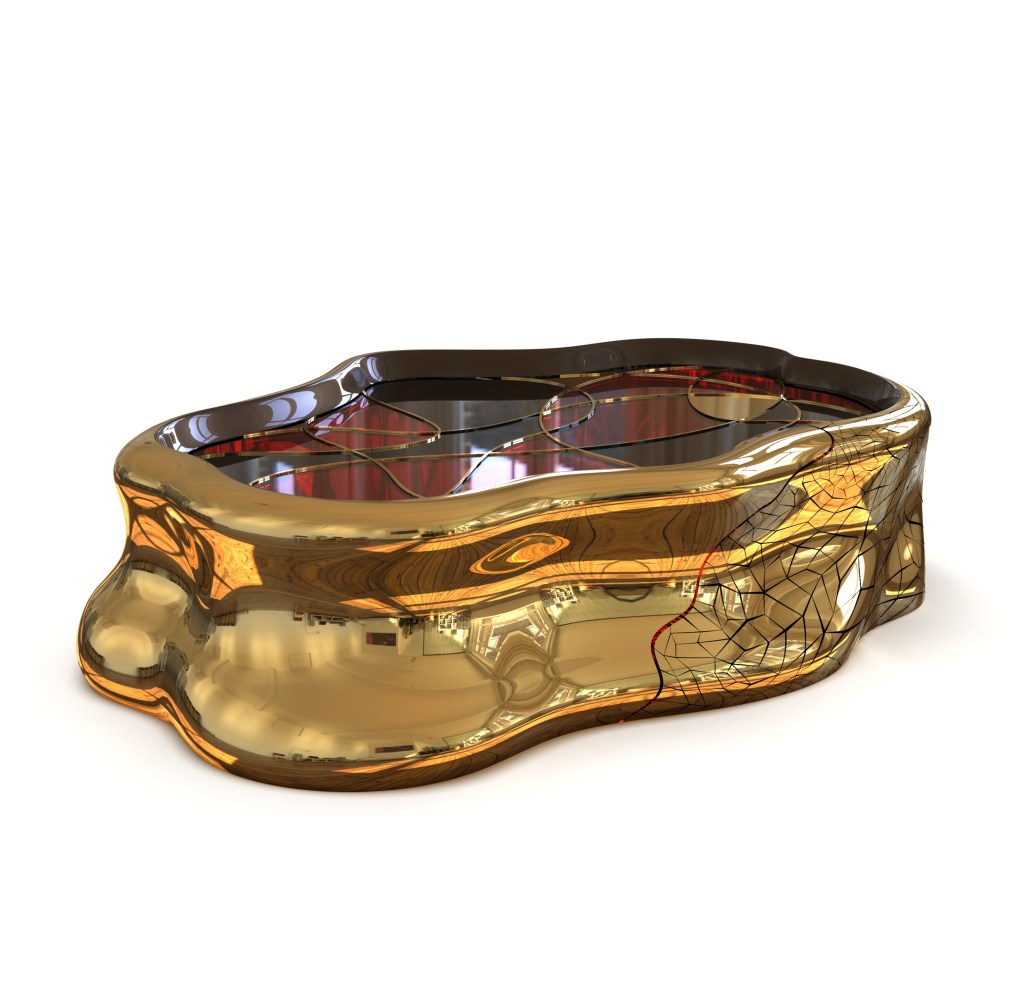
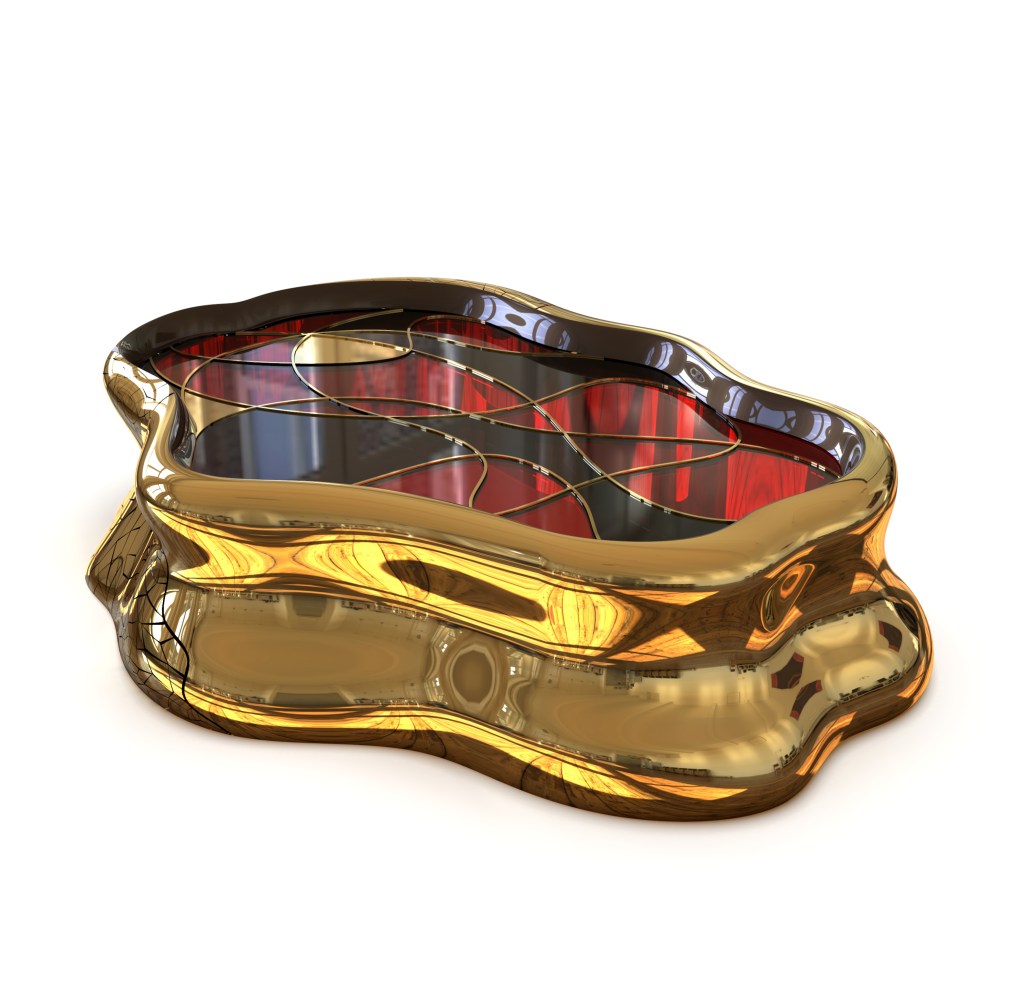
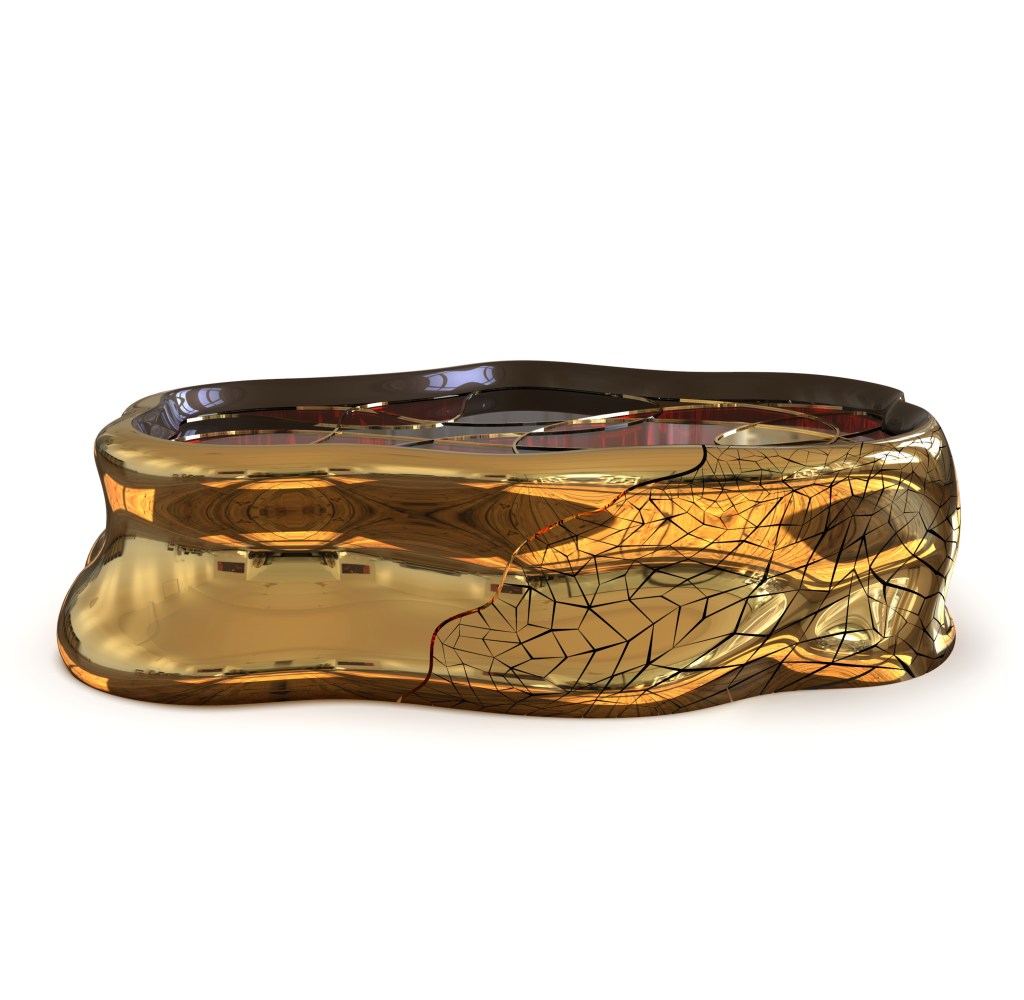
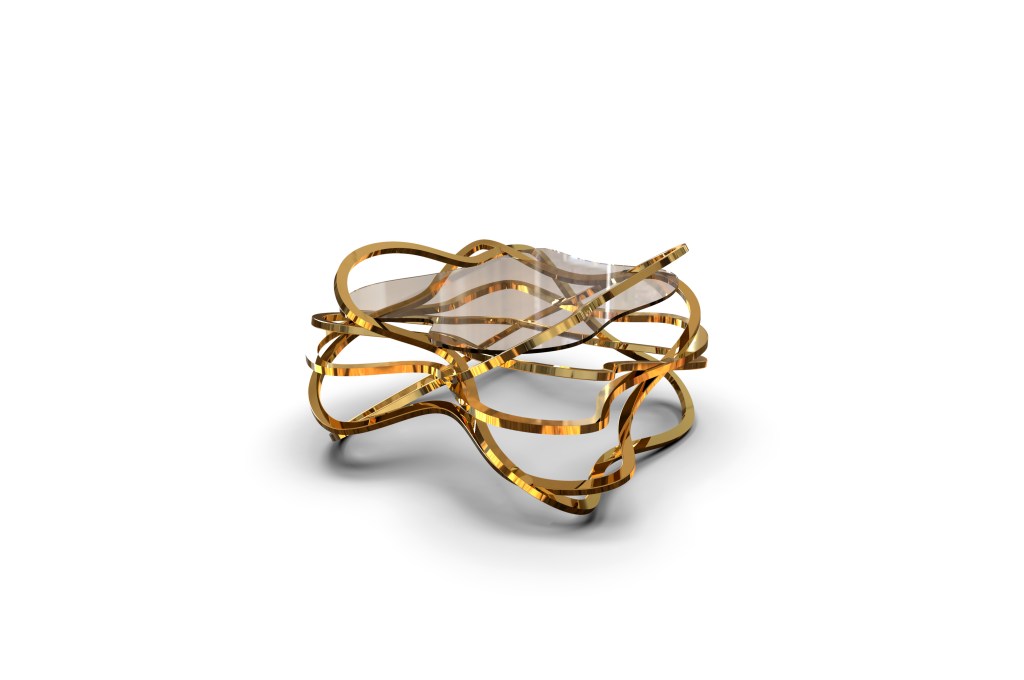
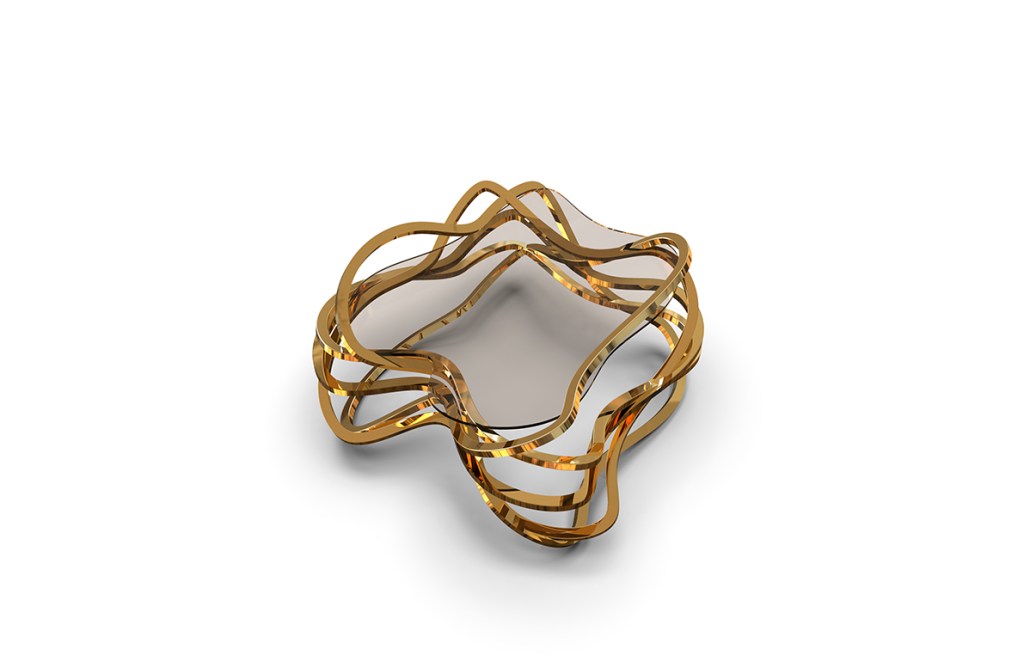
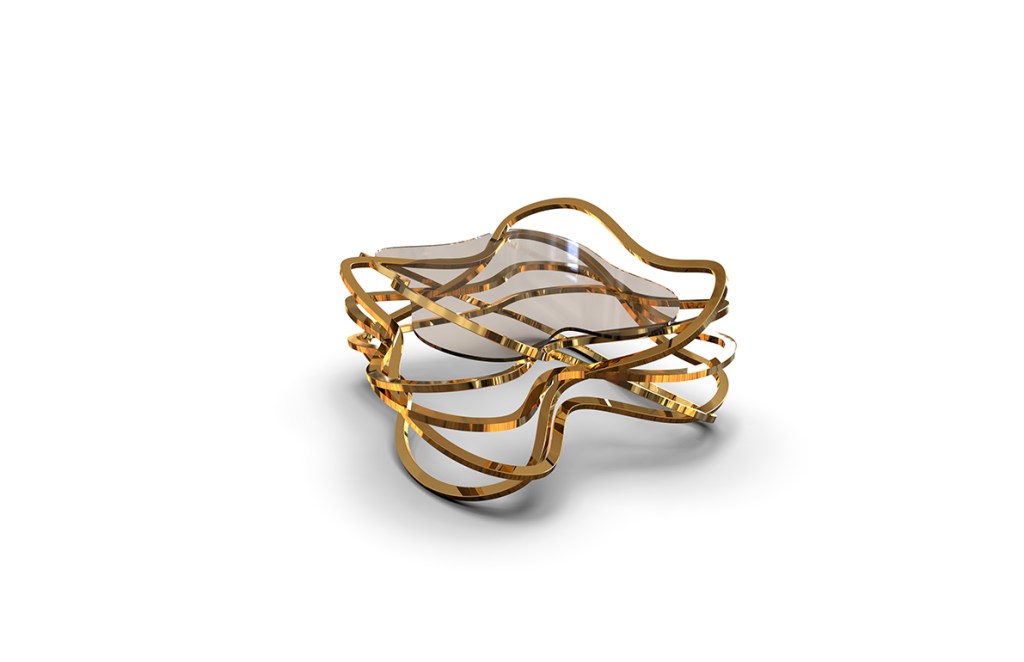
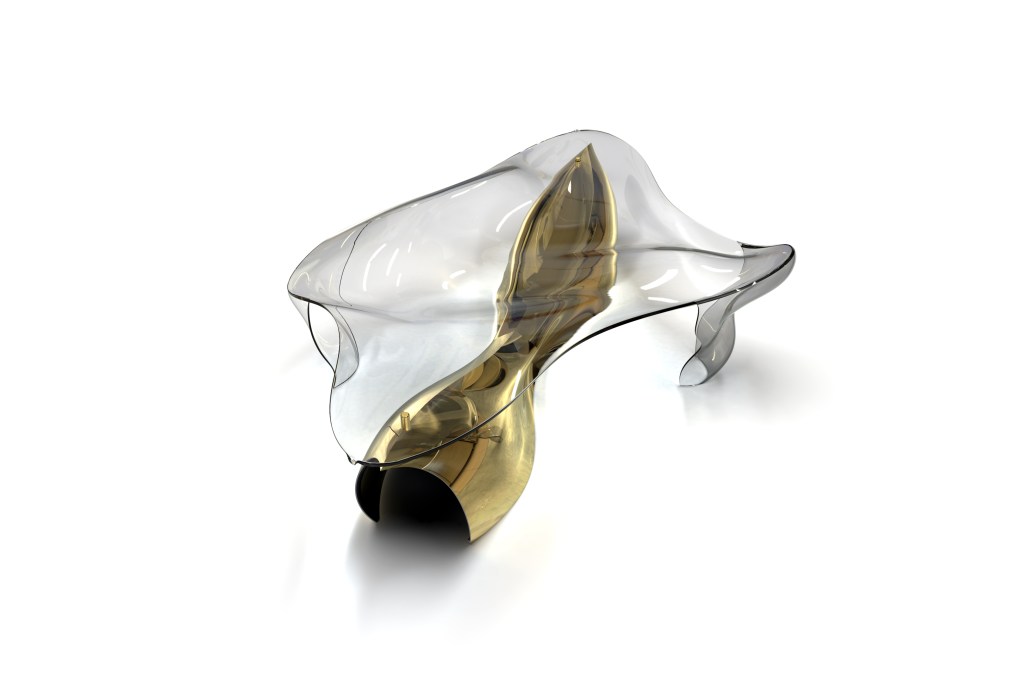
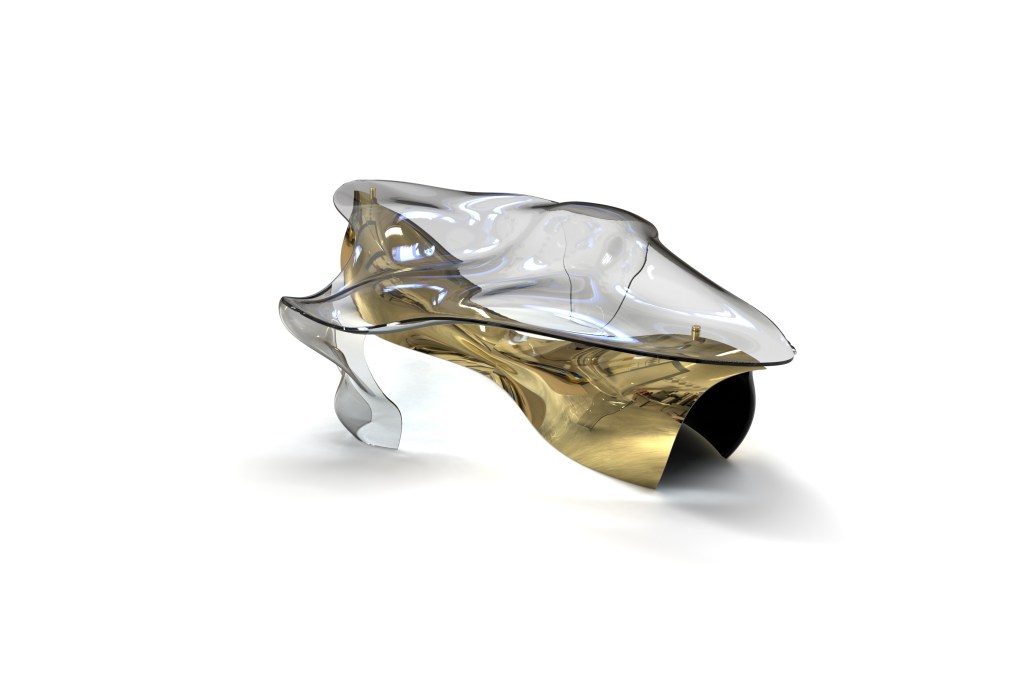
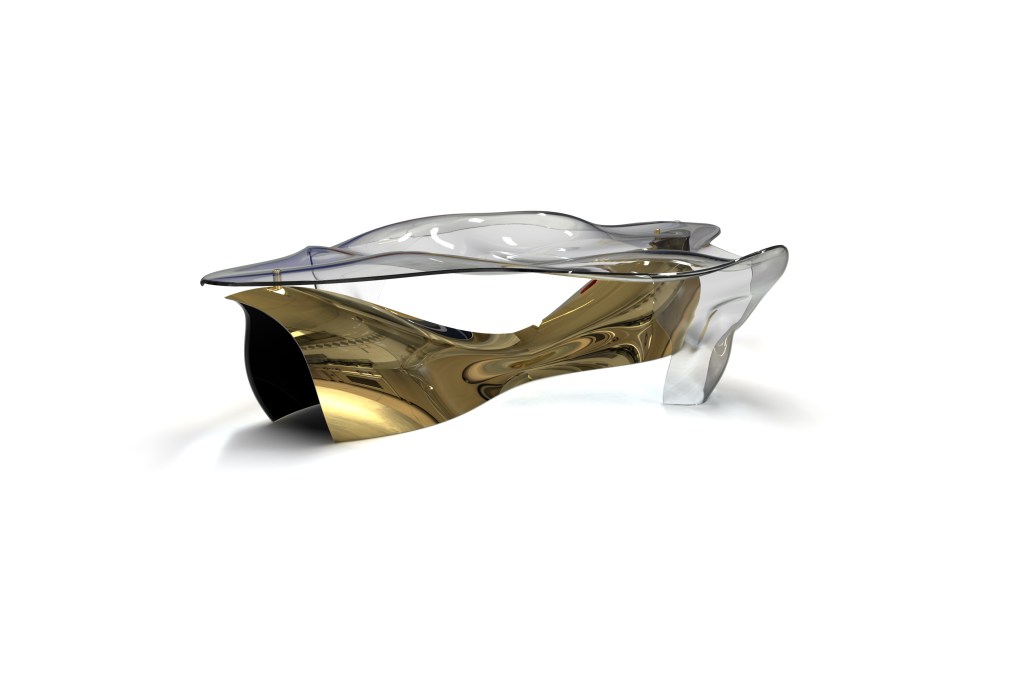
See our inspiring Curl coffee table. The free and exuberant form of this coffee table reflects that simplicity can also be fabulous and exuberant.
Launched in 2017 by the King Abdulaziz Center for World Culture (Ithra) in collaboration with Art Dubai, the prize is awarded to emerging Saudi and Saudi-based talent in contemporary art to fund, promote and offer Saudi artists a global platform.
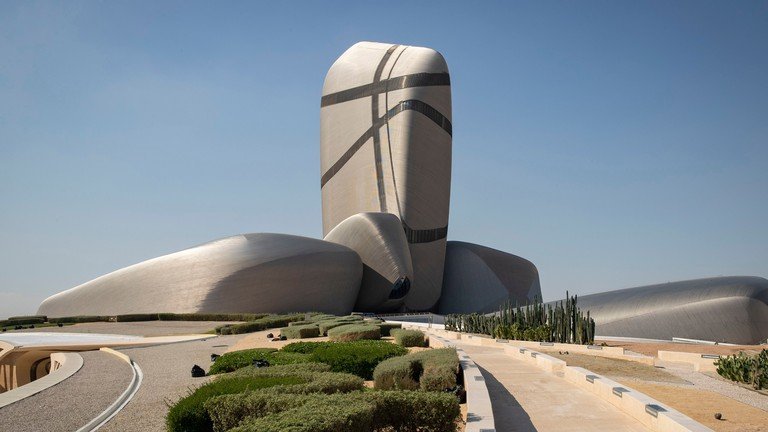
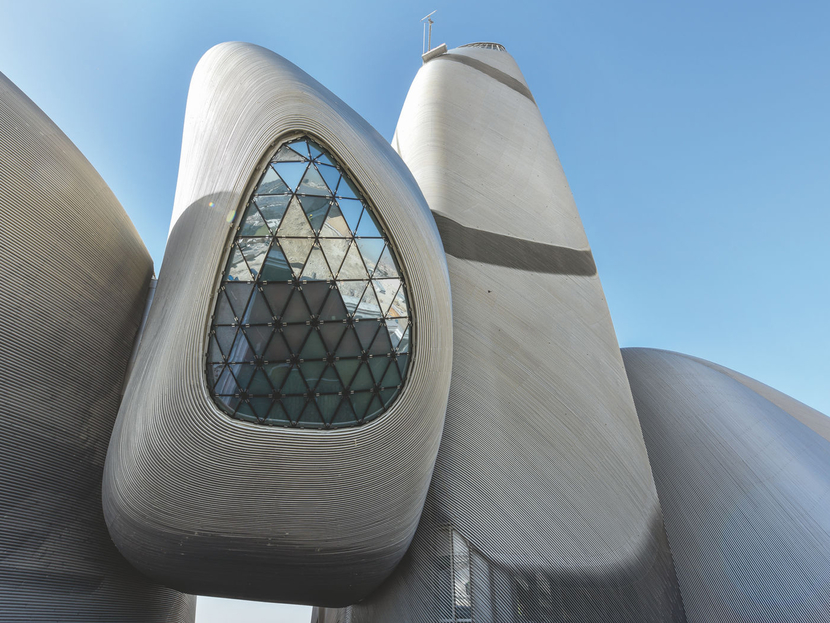
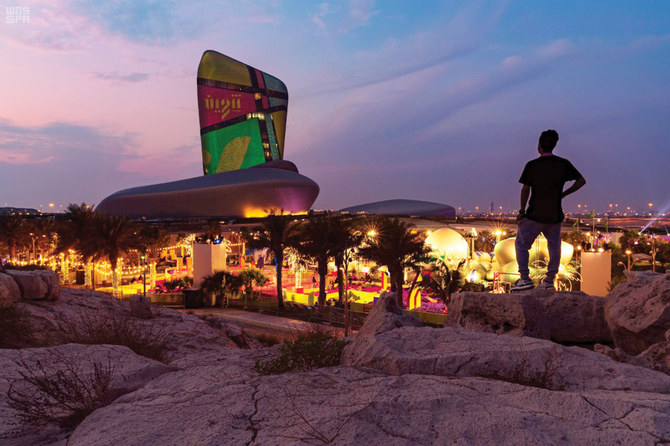
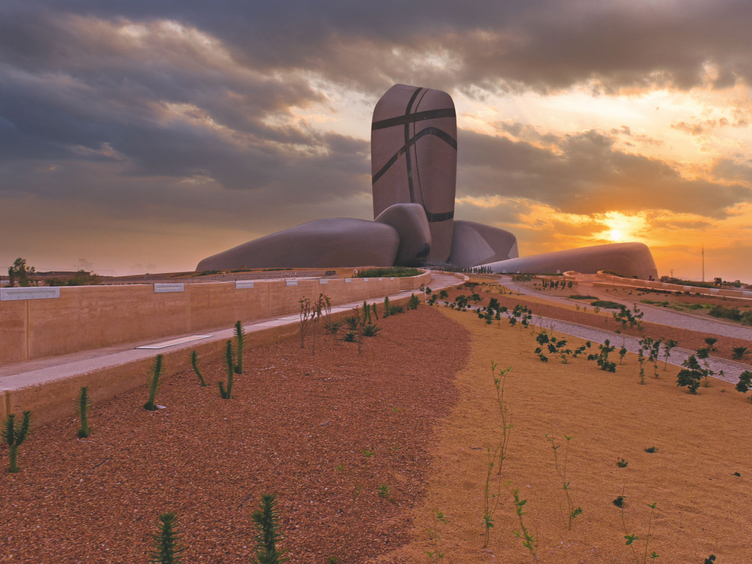
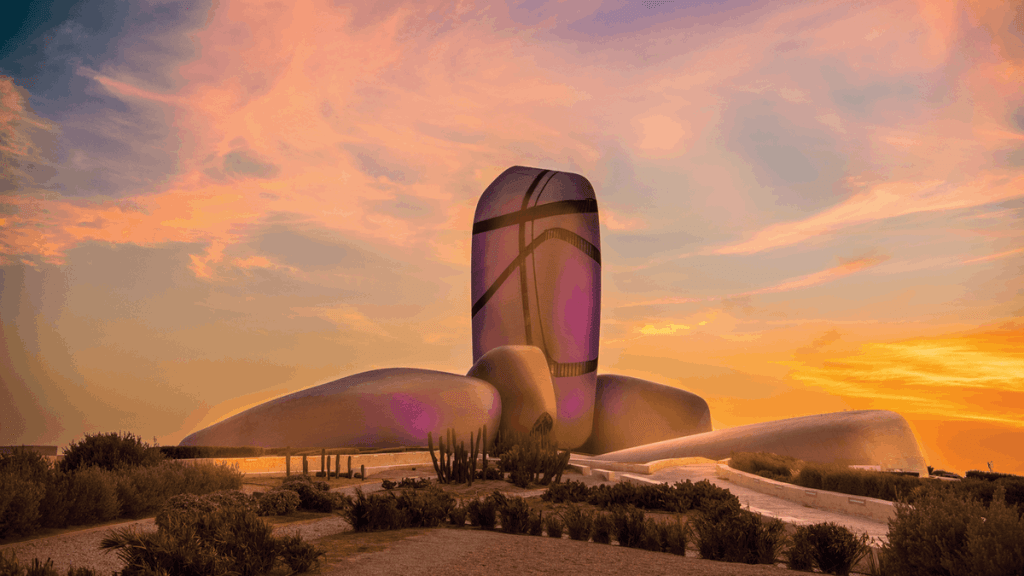
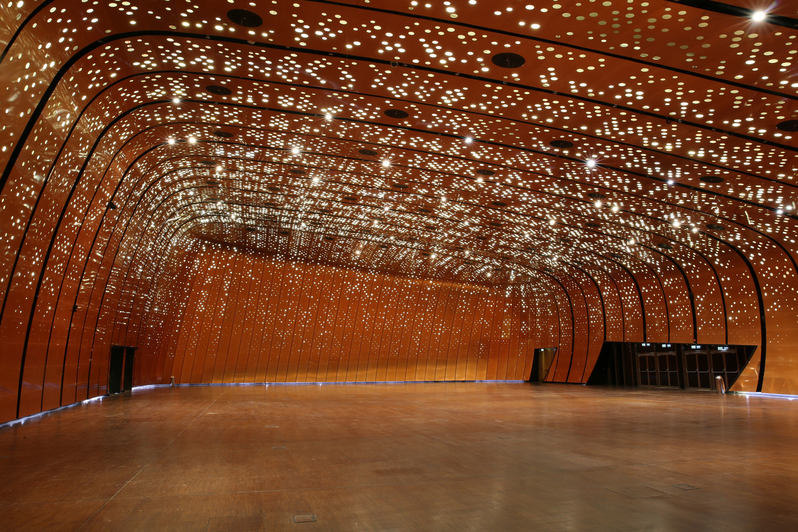
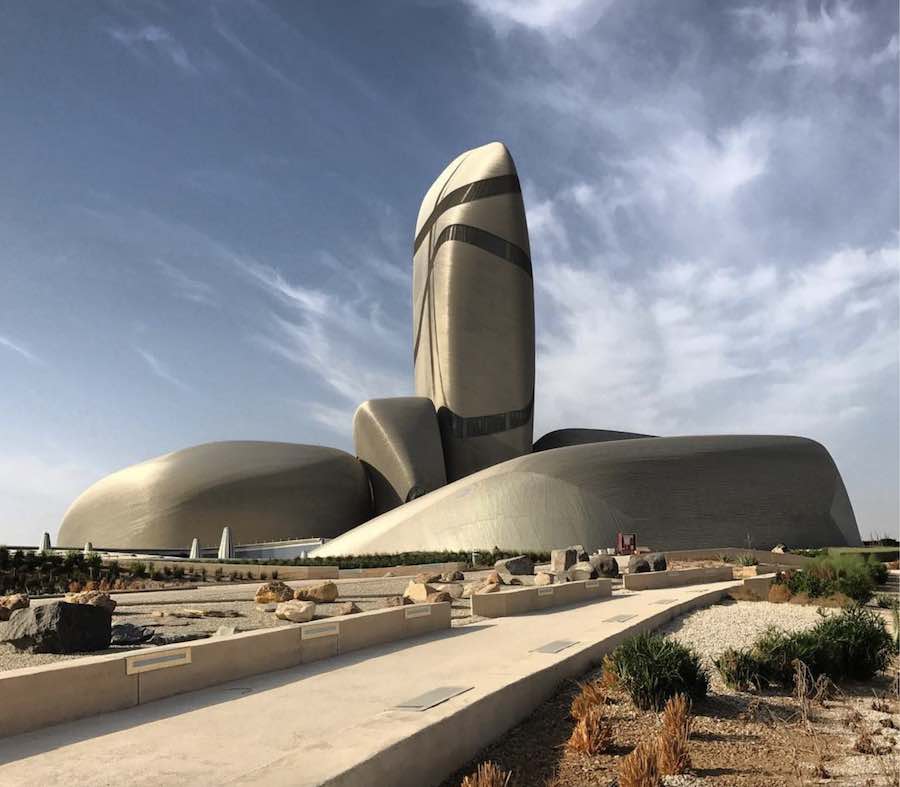
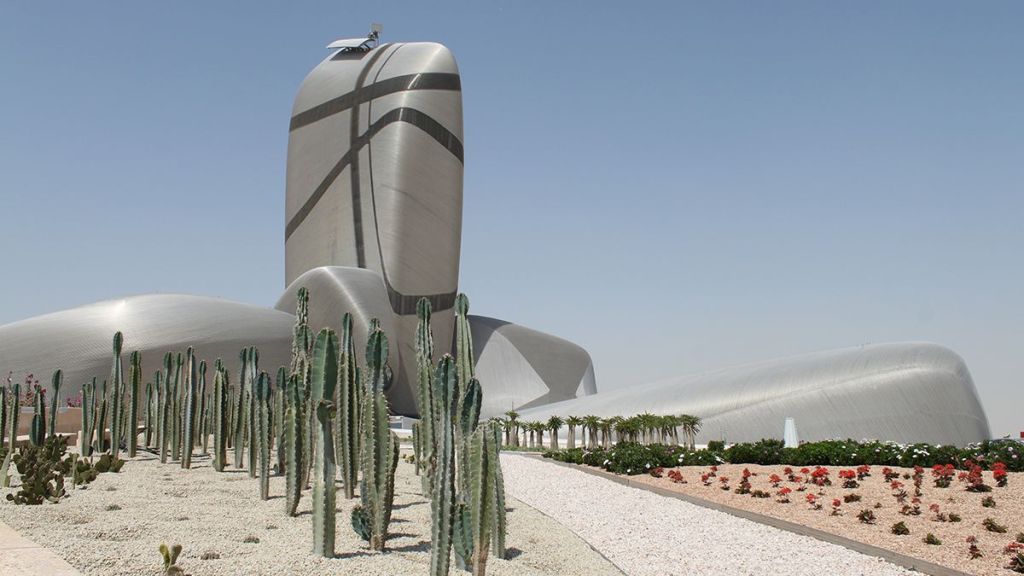
Designed by Norwegian architects Snohetta, the King Abdulaziz Centre for World Culture, or Ithra, is a stunning feat of engineering. Composed of five buildings, the structure houses a library, Idea Lab, the Ithra theatre, a cinema (a feature virtually unheard of before 2018), a museum with four galleries, and an immersive energy exhibit. It also features an archive collection, and an expansive 1,600 square-metre Great Hall.
Saudi Aramco is also the developer of one of the largest residential compounds in Saudi Arabia, located just a few minutes’ drive from where Ithra now stands. So, the initiative was personal.
“They thought ‘what is better than to invest in people?’ Human capital,” Alrashid explains. “With that came the idea of establishing a cultural center that would accelerate the kingdom’s transformation towards a knowledge-based economy – and one that would be inclusive for every individual of the community.”
Known for such alluring projects as the first underwater restaurant in Europe and the upcoming Shanghai Grand Opera House, Snohetta (which has offices around the globe) was chosen to lead the design, inspired by the region’s cultural landscape and heritage. “There were a lot of challenges in the engineering of it,” said Nasir, “but symbolically, abstractly, the firm had a good understanding of the design.”
With ground-breaking taking place in 2010, many components of the project in the beginning were still being refined (the cinema, for example, would be introduced later), and the design was being developed as it went along.
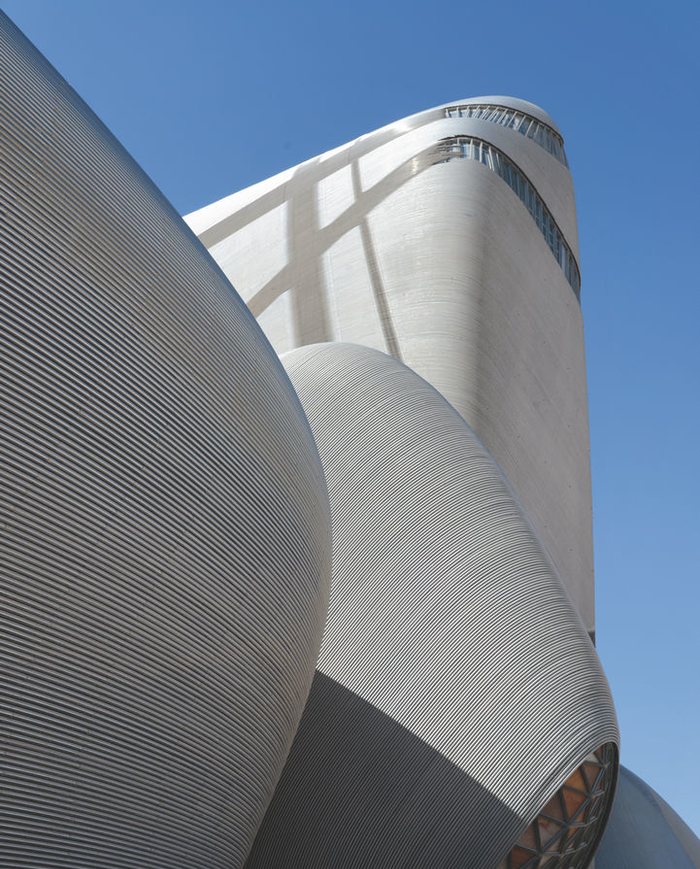
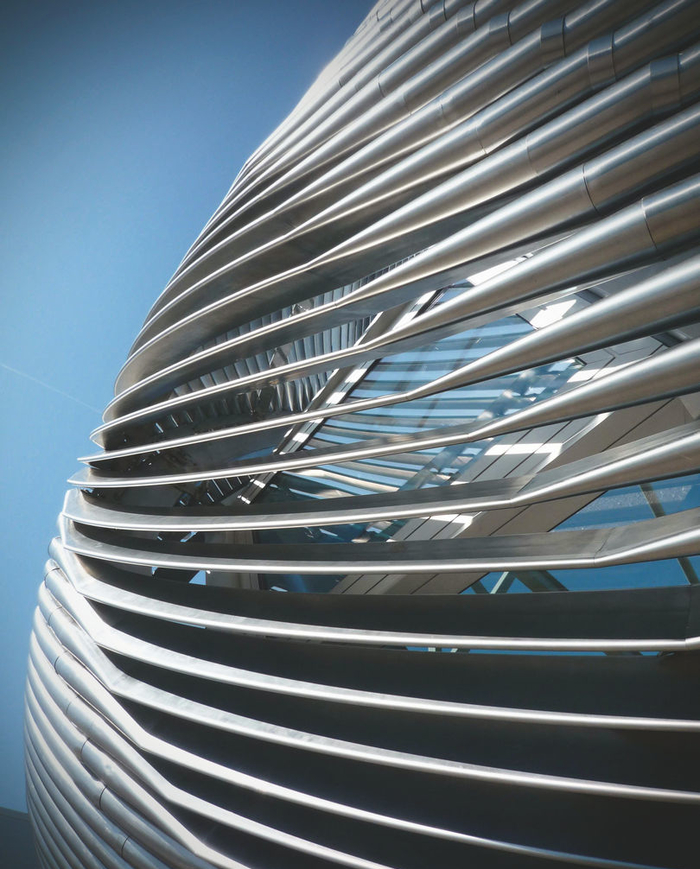
“A lot of inspiration was taken from Islamic architecture, believe it or not,” Nasir says. “The rammed earth for instance – seen throughout the interior of the center, and especially in the atrium and near the Great Hall – is based on the old, traditional architecture in the region, like mud brick houses,” he explains. “The steel tubes on the building’s exterior also took inspiration from the concept of Mashrabiya screens, allowing light to come through while providing shade,” he says.
Ithra is also a paradigm of sustainable architecture, achieving LEED (Leadership in Energy and Environmental Design) gold certification for its use of sustainable materials and design. “The Xeriscape is one major contributor to achieving this goal,” says Nasir referring to a type of landscape design that employ low-water-use or drought-tolerant plants. “The desert plants require less water and fit the surroundings. It was used here for the first time in the kingdom’s history.”
Previous Ithra Art Prize winners are Sharjah-based conceptual artist Ayman Zedani whose commission, Meem, was exhibited at Art Dubai in 2018 and, London-based Saudi Arabian artist, Daniah Alsaleh, whose large-scale multimedia installation, Sawtam, was unveiled at Art Dubai 2019 and is currently part of ‘Artificial Intelligence and Intercultural Dialogue Art Exhibition’ at the Hermitage Museum in St. Petersburg, Russia.
In the end, what Ithra truly represents is a transformative era for Saudis, and one for a regional youth that is ready for a shift. “We needed this vision to materialize within an architectural landmark,” Alrashid adds. “And one that somehow embodies what we represent – change.”
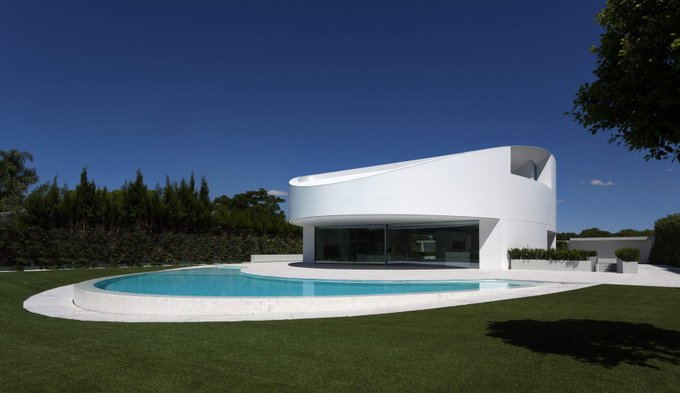
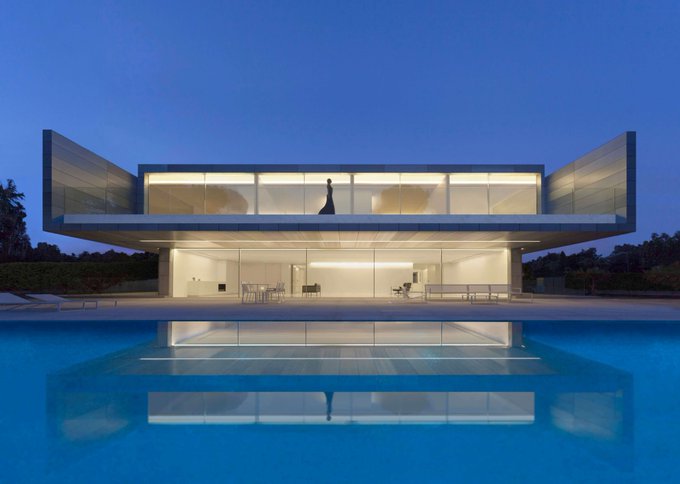
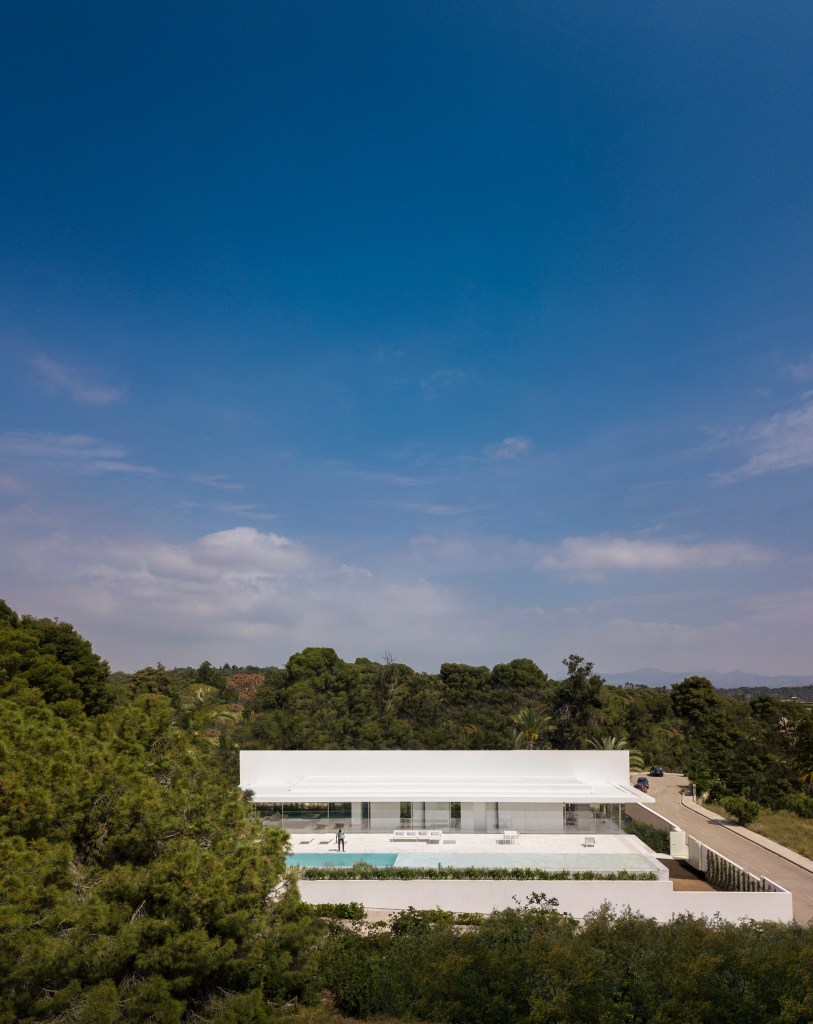
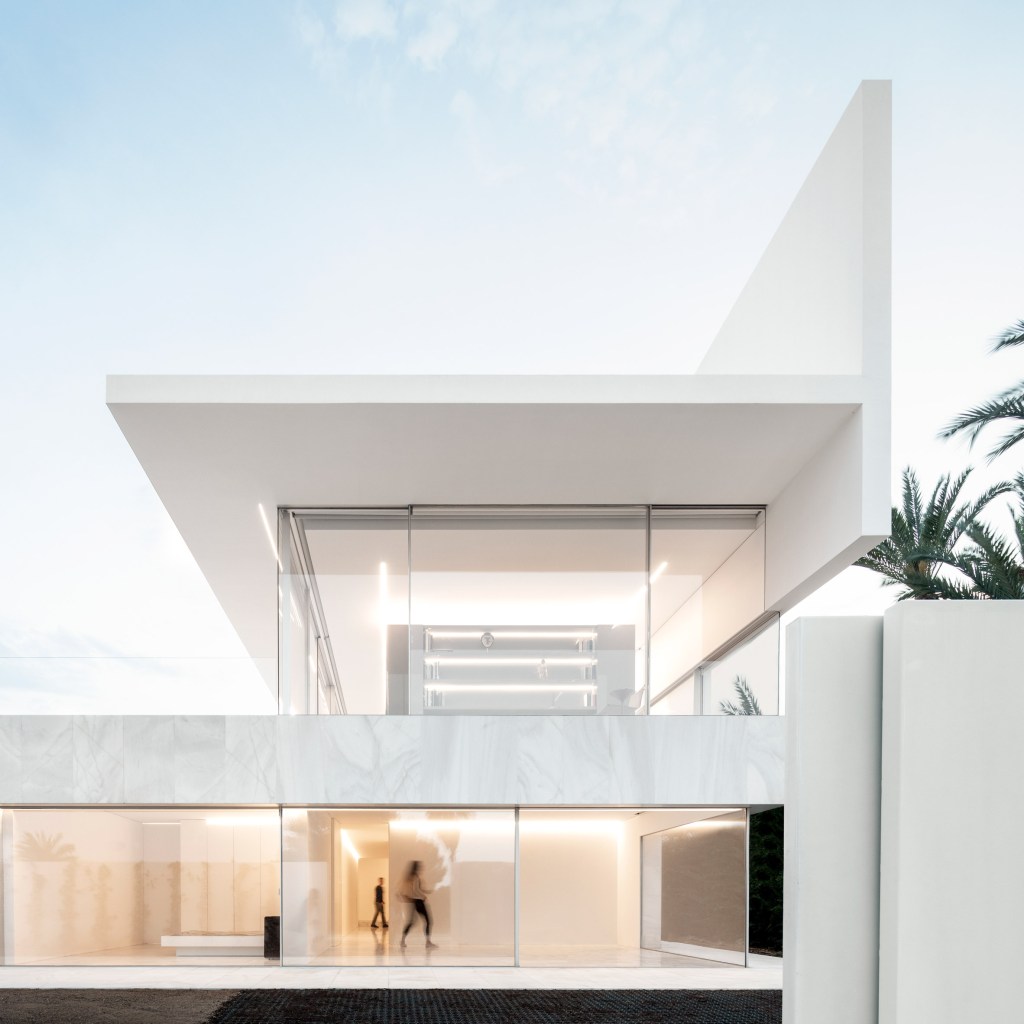
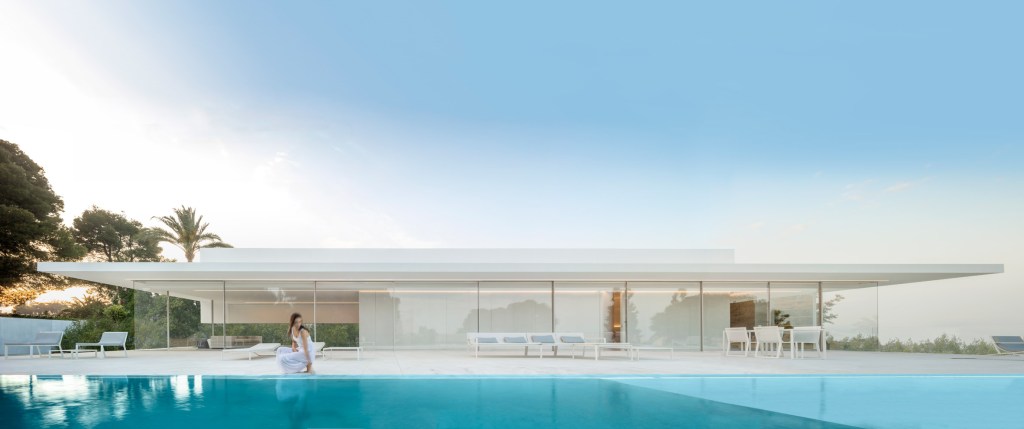
Titled ‘House in Benahavís’ Fran Silvestre Arquitectos has designed an all-white dwelling which is supported by a single volume set at a perpendicular angle to the slope.
The property is located in ‘La Zagaleta’ — a development near Marbella on southern spain’s costa del sol.
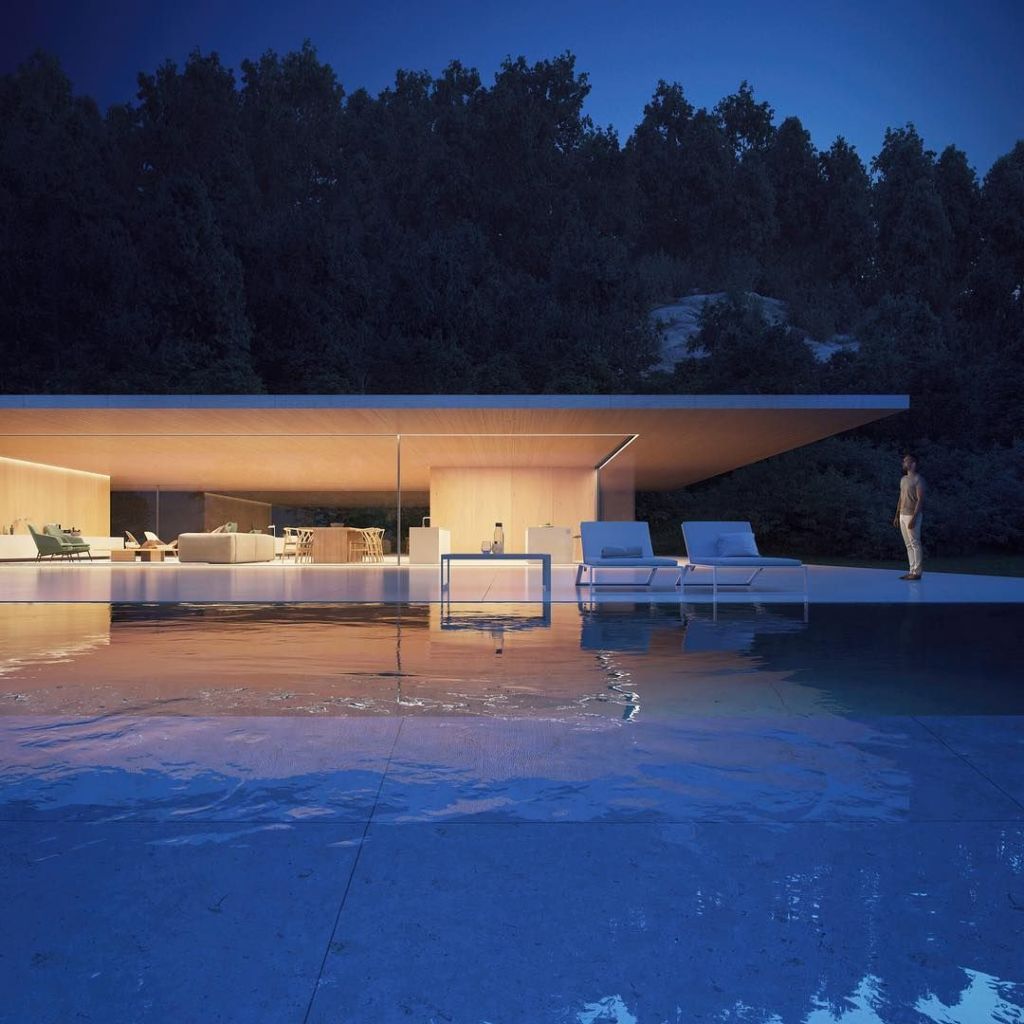
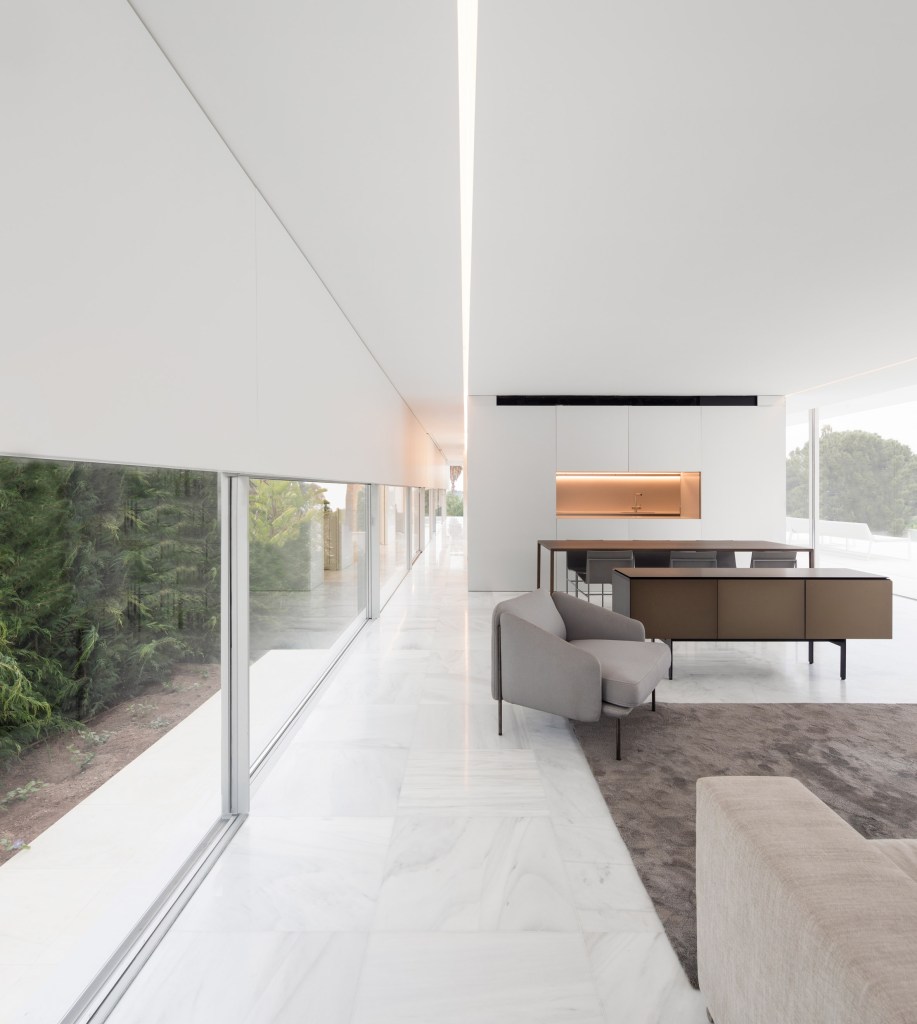
Thin steel elements contrast with the heavy stone and marble in a bright, minimal palette of materials that maximises the reflection of light throughout the space.
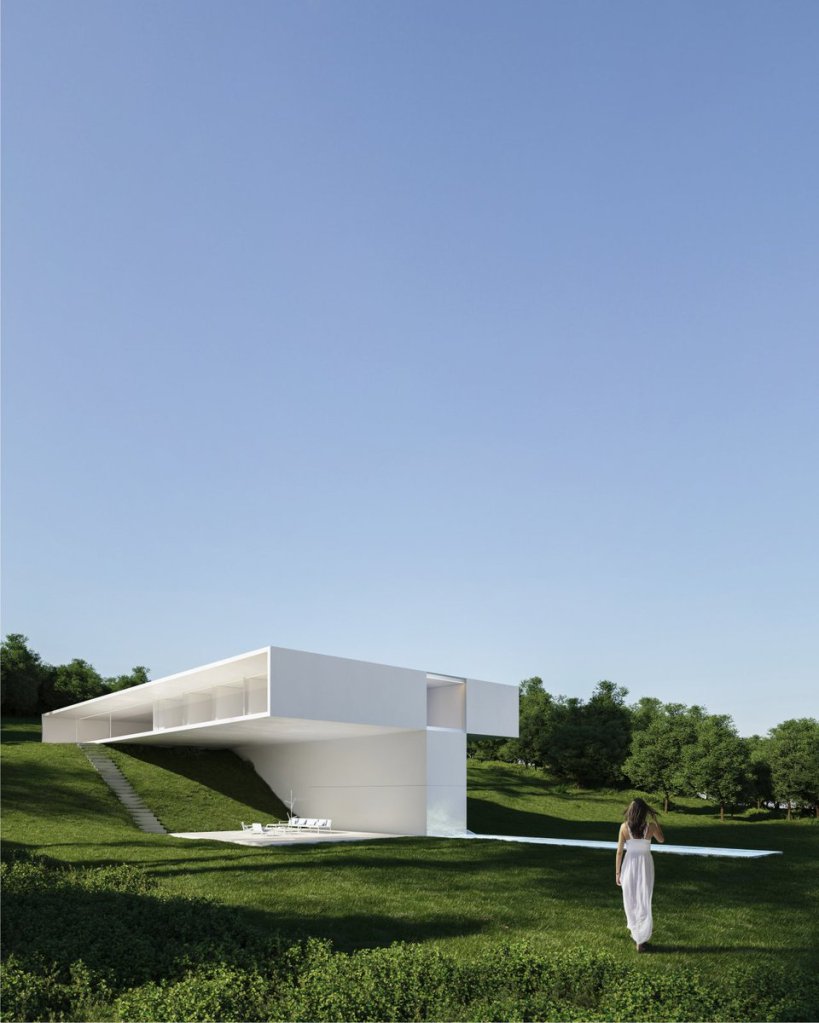
Hoffman House is raised on a stone podium to mark a clear distinction with its natural surroundings.
Where the site slopes downwards, a basement level has been slotted underneath this stone base. This basement houses a garage and cellar and provides a dramatic route of entry up to the house, via internal stairs or a long stone stair that leads along the back edge of the site.
The T-shaped roof, as well as preventing overlooking from the north, also shields a large south-facing roof terrace or walkable roof, which cantilevers out to create shaded areas below.
The tourist attractions are easy to point out: The Colosseum, the Leaning Tower of Pisa, and Trevi Fountain, yet the hospitality industry has also capitalized on a country deeply rooted in history. Former churches, monasteries, bank vaults, historic lighthouses, farming estates, and regal castles have all taken on a new life in the form of a luxe hotels.
The beauty of these reincarnated spaces is that through careful and attentive design features, they still speak to their historical past while roaring into the modern day as upscale and luxurious showstoppers.
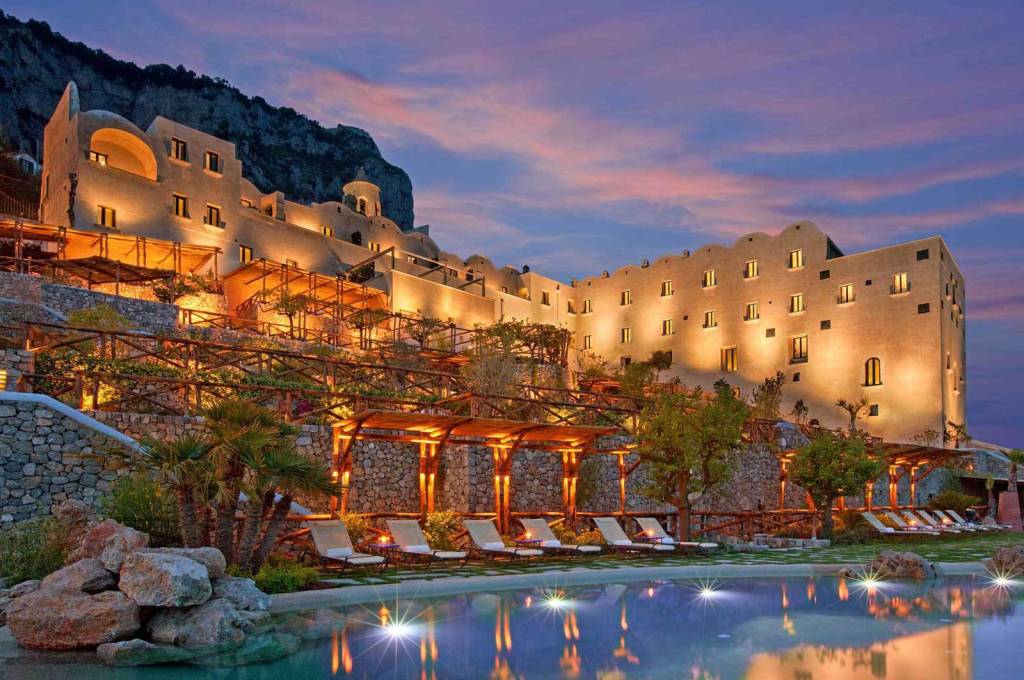
Monastero Santa Rosa (Amalfi Coast)
A former monastery: The boutique- and tourist-packed Amalfi Coast may not go hand in hand, but Monastero Santa Rosa’s picture-perfect 20 rooms and lush multilevel gardens are the perfect coastal hideaway. The former 17th-century monastery now lives again in the form of private relaxation areas, sundecks with canopied loungers, a dazzling infinity pool, and a lavish day spa. Il Refettorio boasts a Michelin-starred restaurant and unforgettable panoramic views.
Monastero Santa Rosa (Amalfi Coast) Monastero Santa Rosa (Amalfi Coast)Monastero Santa Rosa (Amalfi Coast)
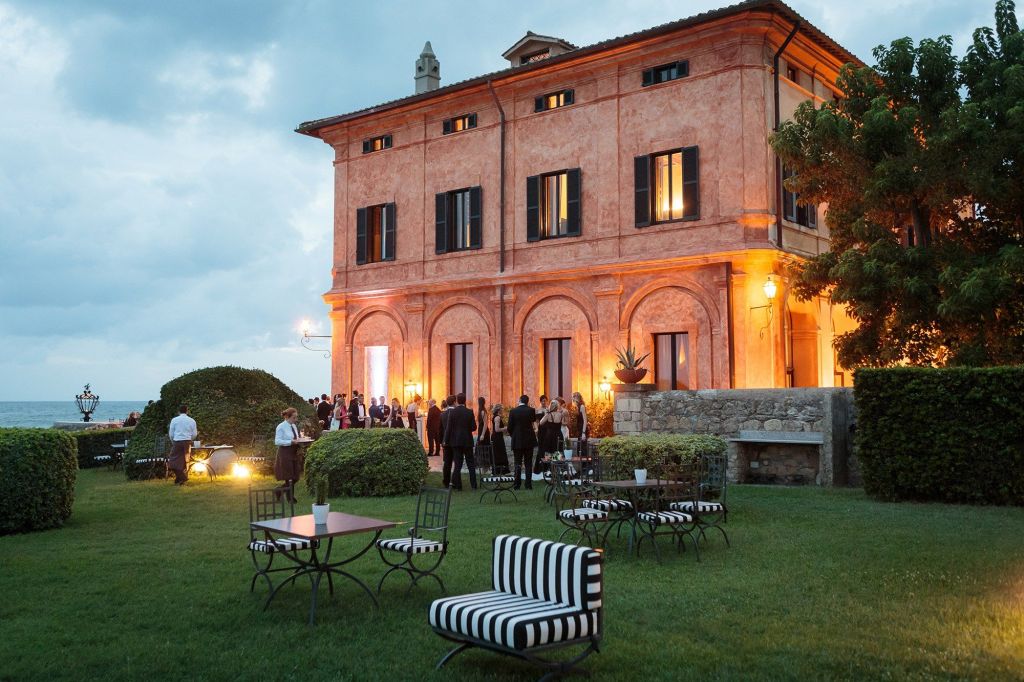
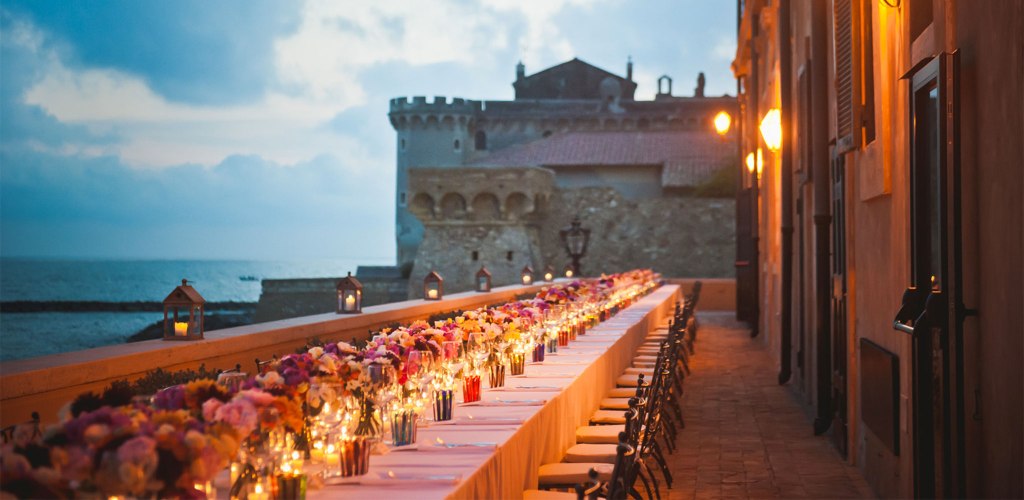
La Posta Vecchia (Lazio)
A former ancient villa and castle: A private beach club, Roman mosaics reserved for the guests’ eyes only, dining inspired by local produce, and floor-to-ceiling arch windows add to the regal character of the fabulous spa. Add to that 19 uniquely designed rooms, each with artworks usually reserved for international galleries, and you won’t want to leave this former ancient villa and castle on Lazio’s Ladispoli beachfront.
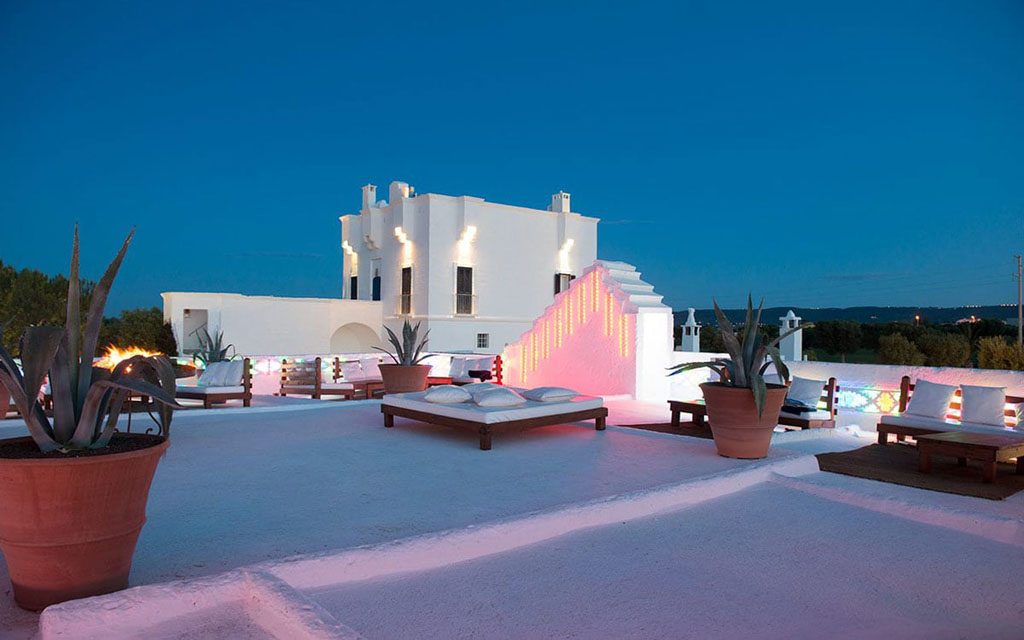
La Posta Vecchia (Lazio)La Posta Vecchia (Lazio)Masseria Torre Maizza (Puglia)
Capofaro Locanda & Malvasia (Sicily)
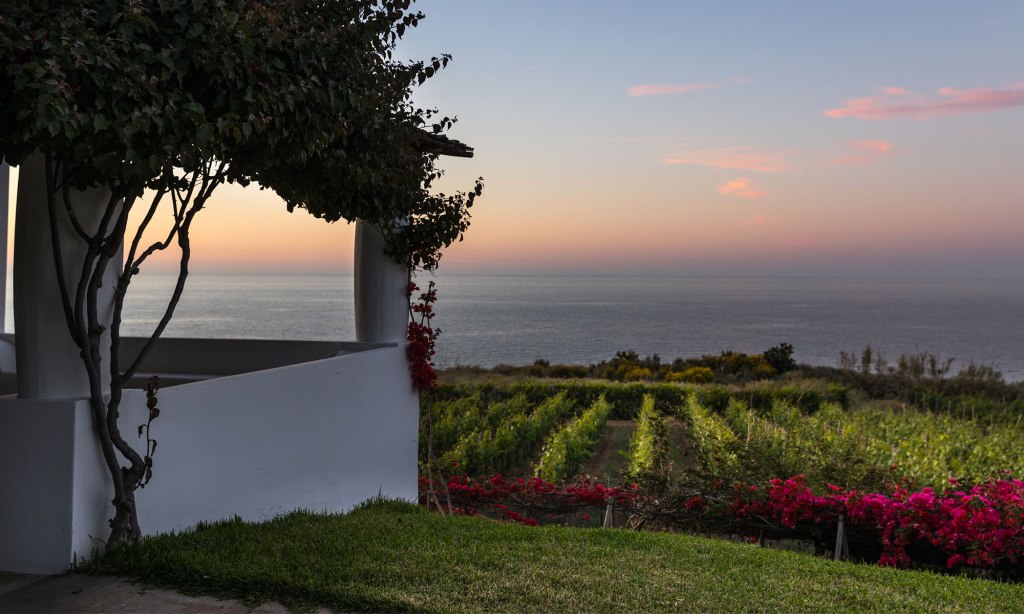
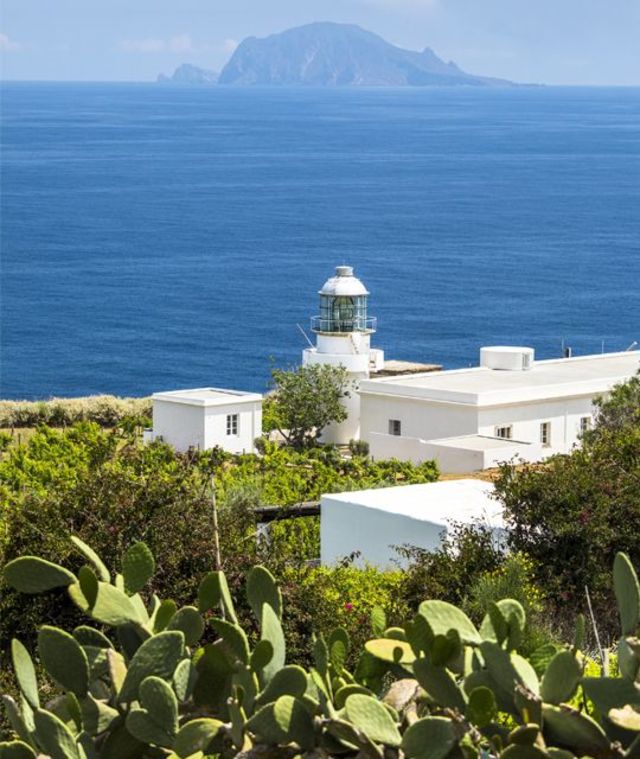
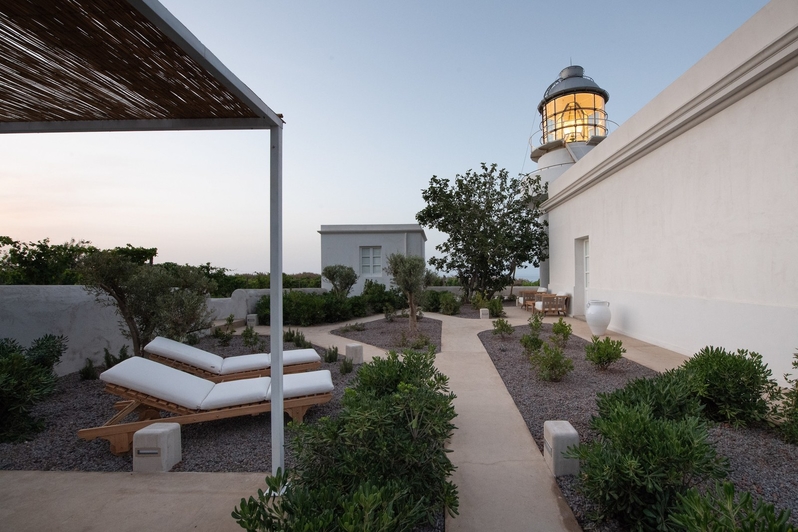
A former lighthouse: The Tasca d’Almerita family combined their love for the beach and wine in a dreamy minimalist resort on Sicily’s Salina island. The lighthouse and protector of the sea has stood tall here since the mid 19th century and remains pride of place on the property, which boasts vineyards for days, views of the imposing volcanic island of Stromboli, and a lush pool.
NH Collection Grand Hotel Convento di Amalfi (Amalfi Coast)
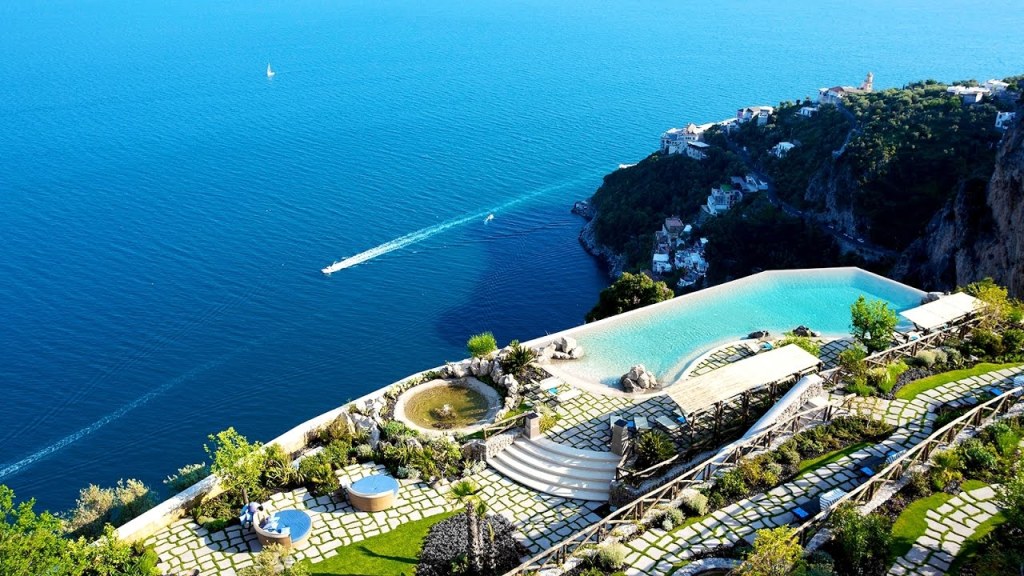
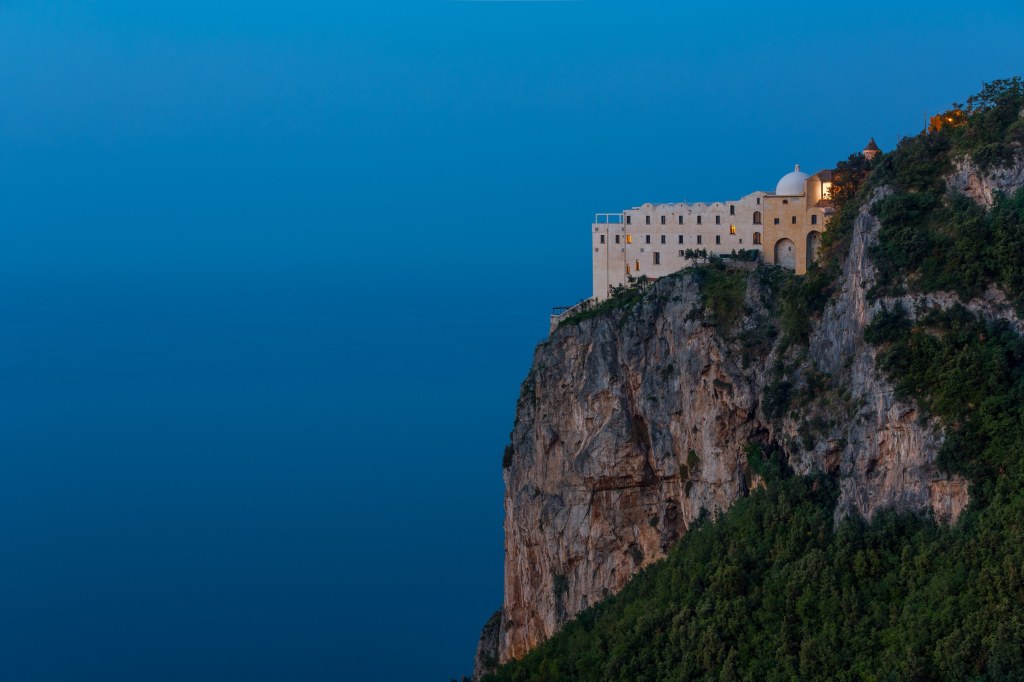
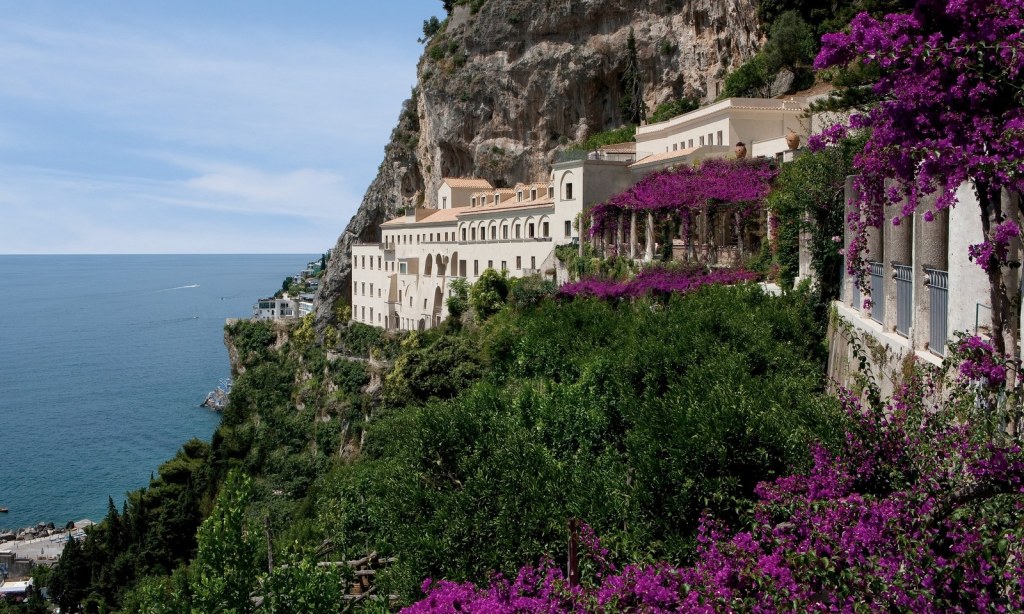
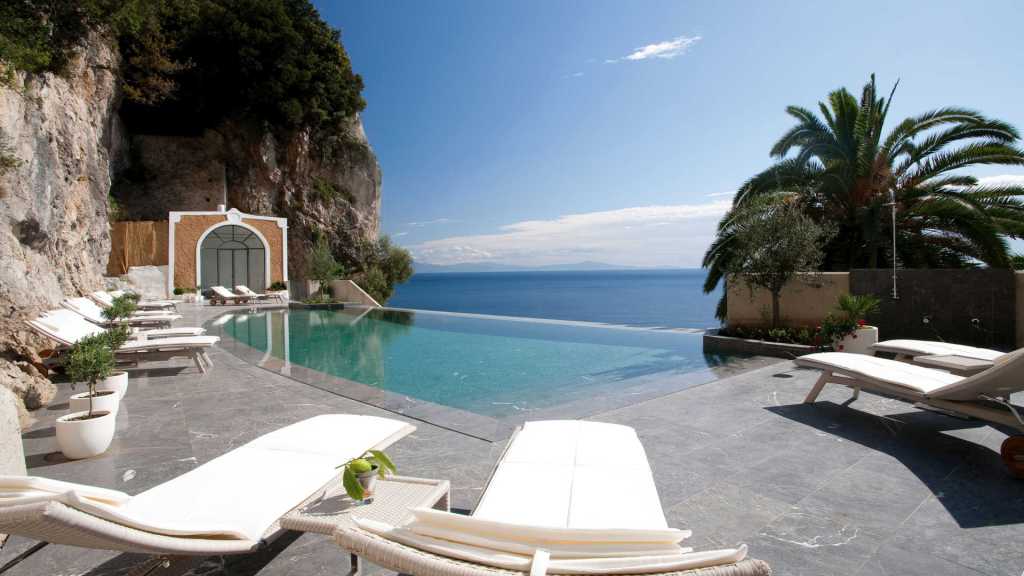
A former convent: A far cry from its 13th-century convent days, this striking five-star property atop a cliff on the Amalfi Coast features designer-appointed rooms (the majority sea-facing), a wellness center, two restaurants, and a spectacular infinity pool. All this set within lavishly manicured gardens and the looming shadow of the tall convent archways, original cloister, and church.
NH Collection Grand Hotel Convento di Amalfi (Amalfi Coast)NH Collection Grand Hotel Convento di Amalfi (Amalfi Coast)
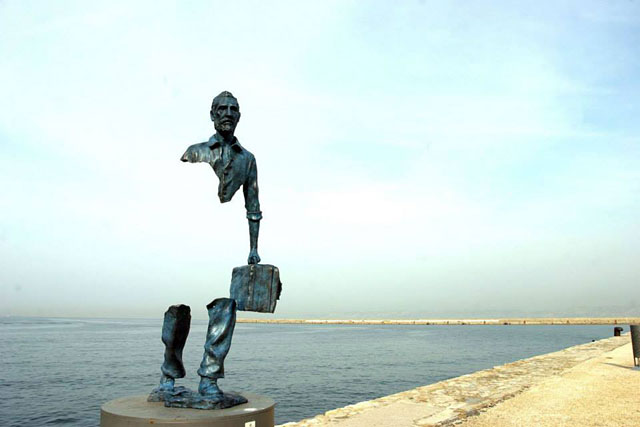
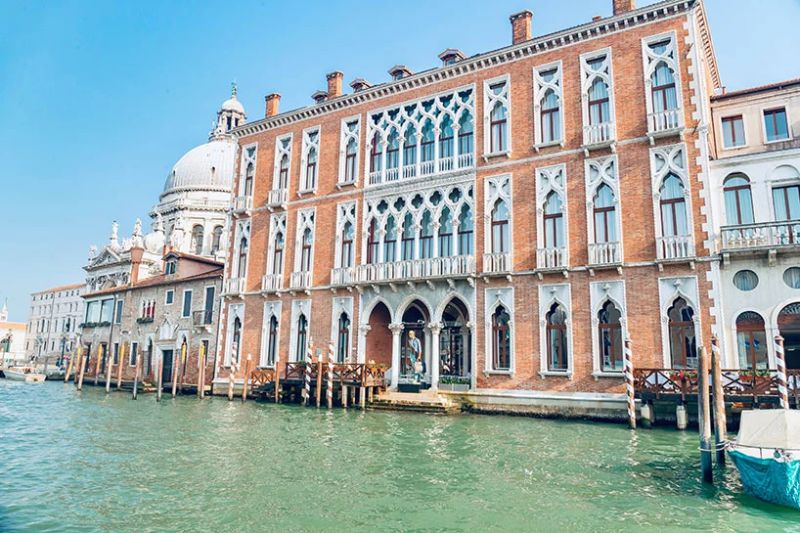
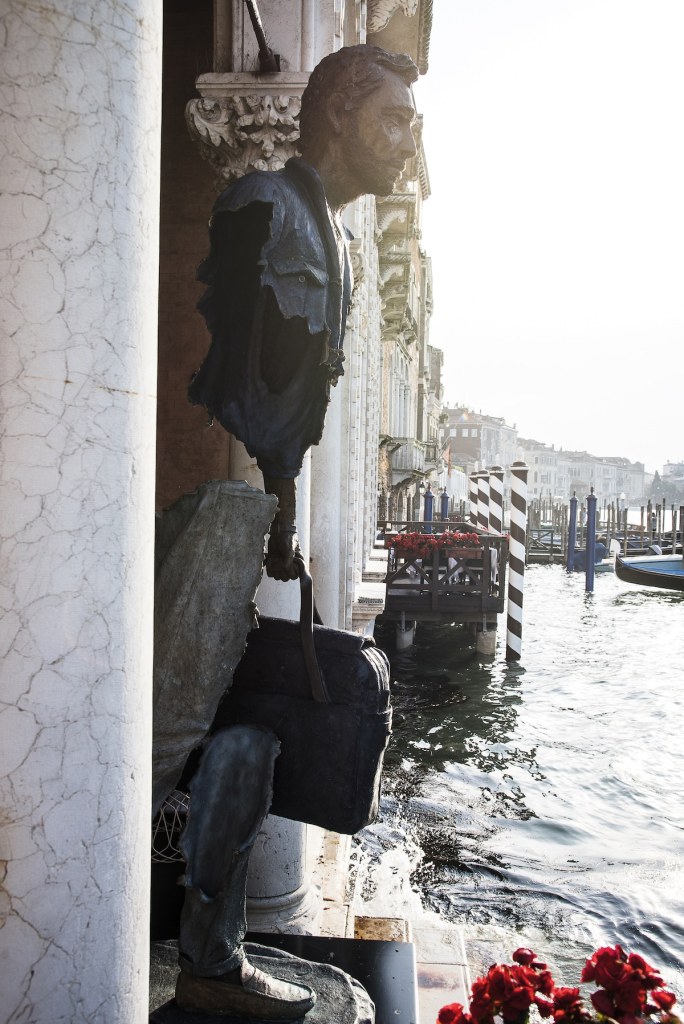
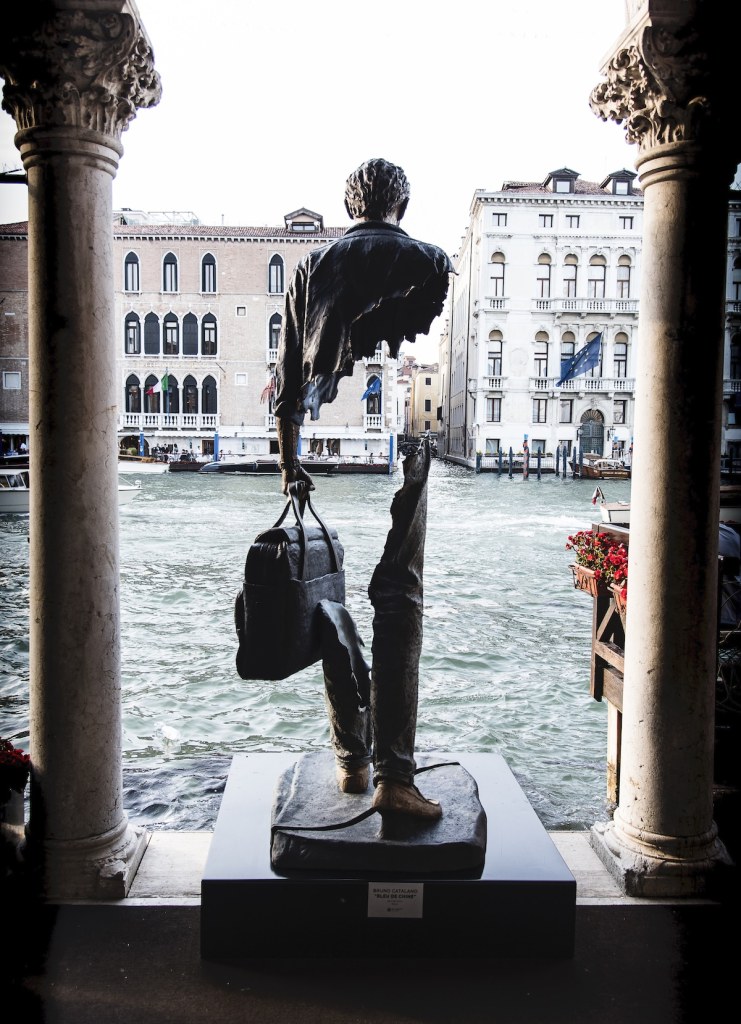
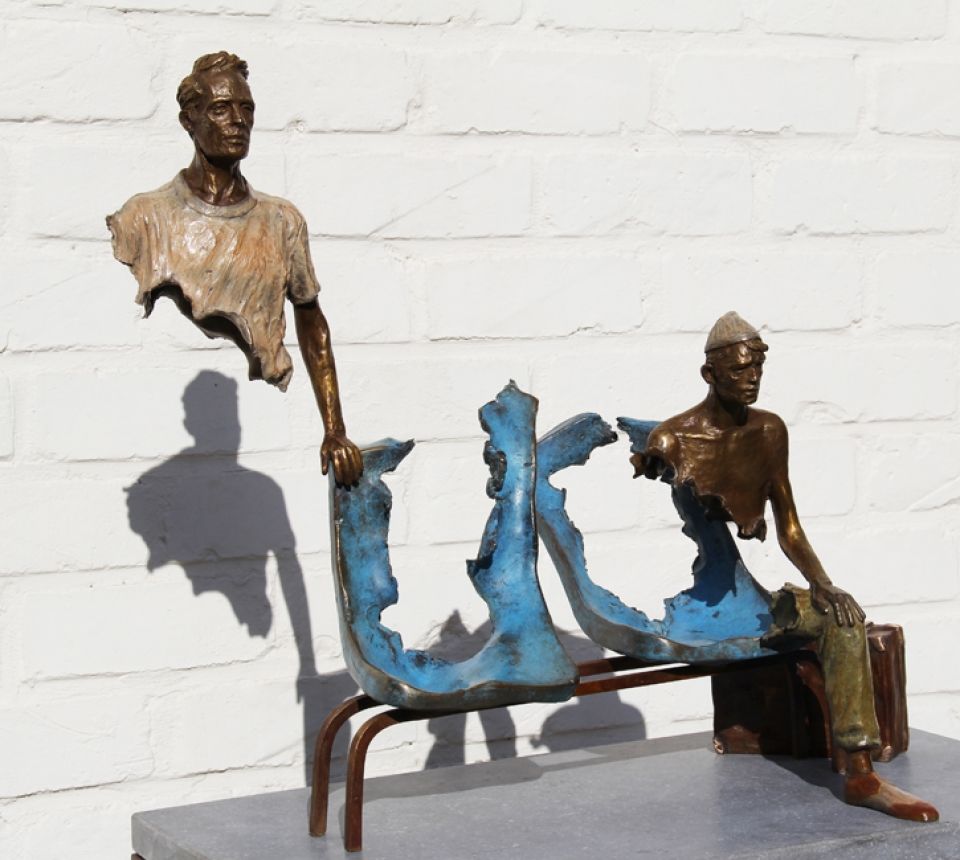
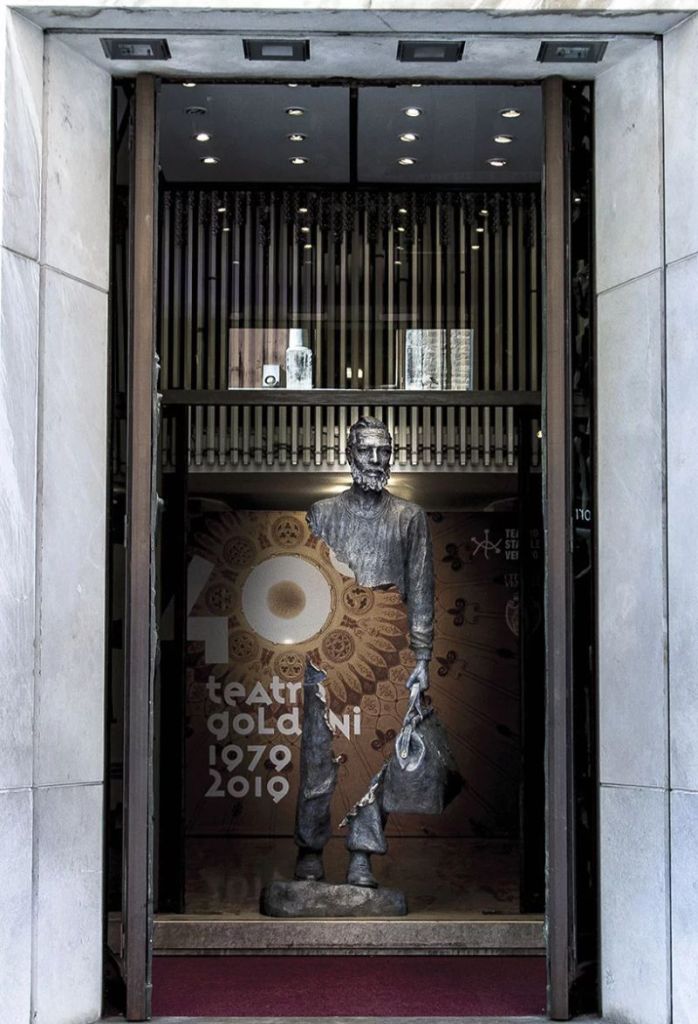
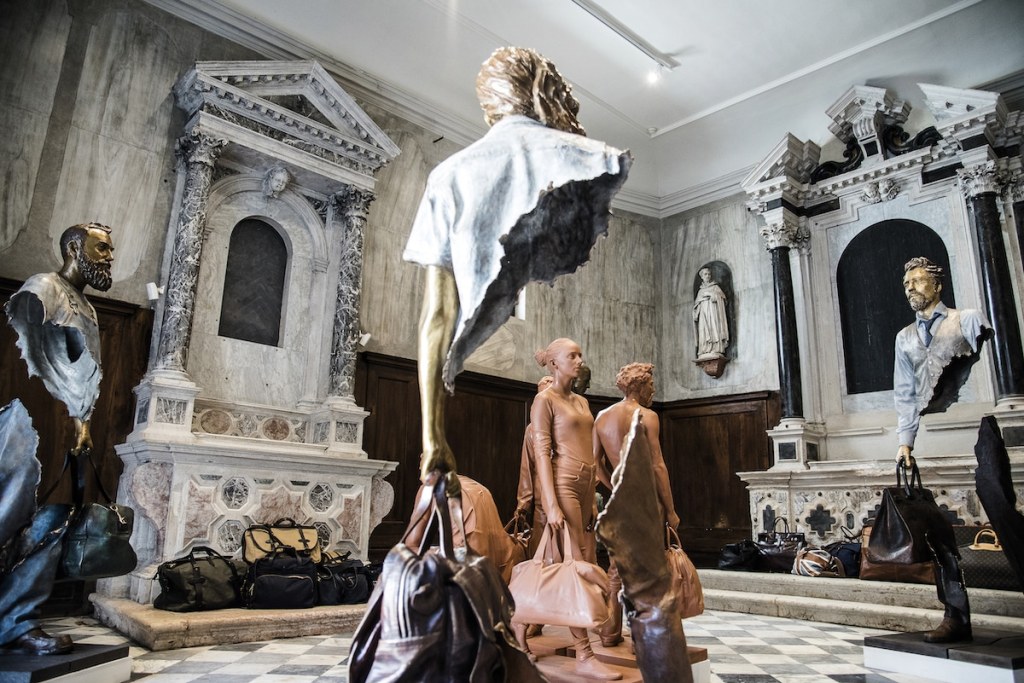
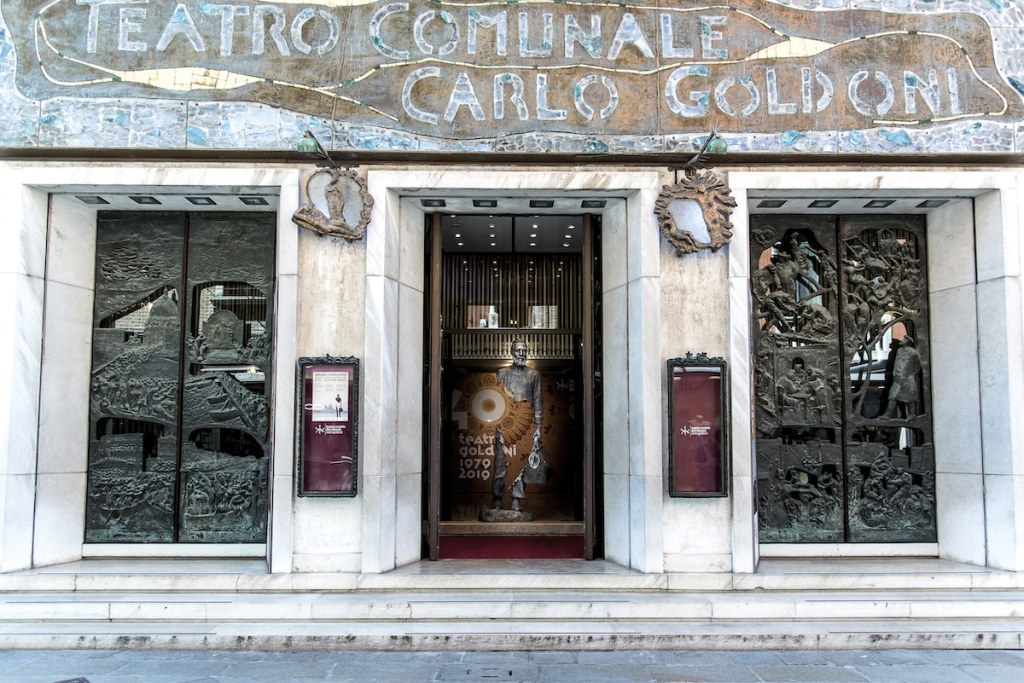
Amazing sculptor Bruno Catalano‘s bronze figures in Venetian lagoon. His Travelers—or Les Voyageurs—are fractured and fragmented individuals, each on its own path. In collaboration with Ravagnan Gallery, on the 58th Venice Art Biennale, thirty of his most recent Travelers create a path through the city. Weaving from theaters to churches to historic palaces, these “incomplete” figures are connected in concept, but unique in their journey.
Catalano’s Travelers are, in some ways, a reflection of his own life. Born in Morocco, he and his family were forced into exile in Marseilles in the mid-1970s. The move, which occurred when he was a teenager, left a lasting impression and shaped his future. After years of working in different professions, he finally turned to sculpture at age 30.
As an artist, his breakthrough came in 2005 when his sculpture was noticed by a Parisian gallerist. From there, Catalano’s technical prowess has developed alongside the intense psychology behind his art.
“In my work, I’m always looking for the movement and the expression of feelings, I get out of form and wax inertia to give them life,” Catalano declares. “Coming from Morocco myself, I carried these suitcases full of memories that I represent so often. They do not only contain images but also experiences, desires: my roots in motion.”
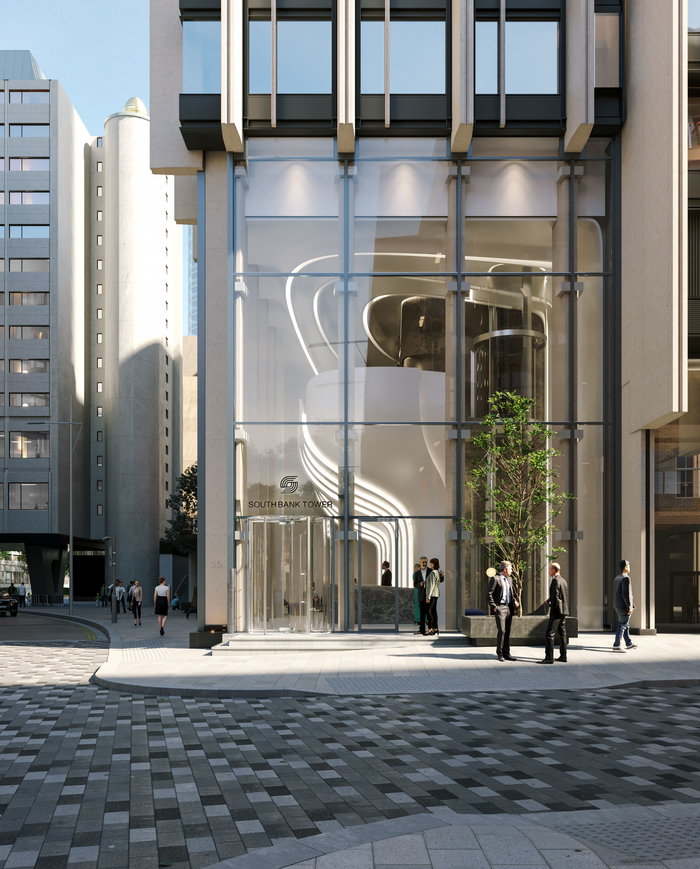
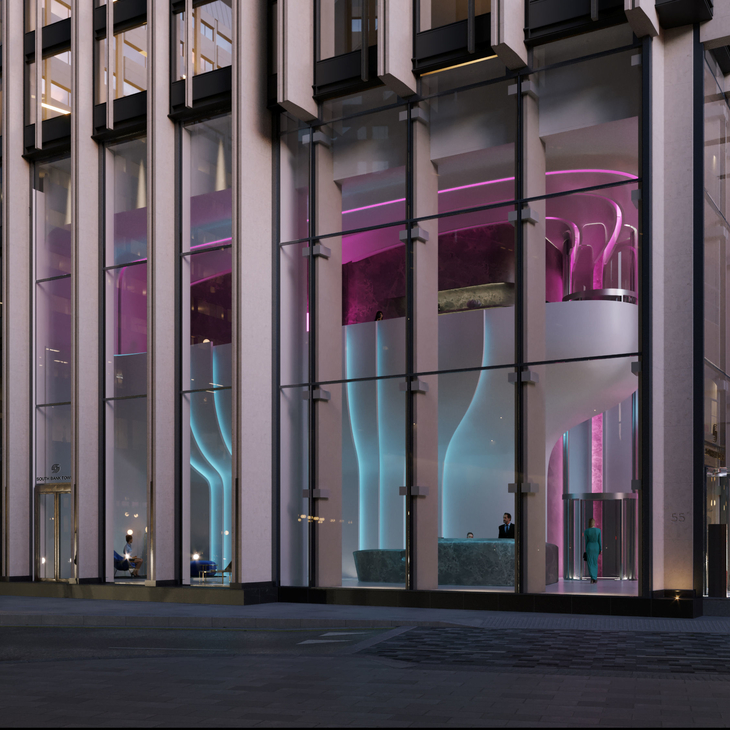
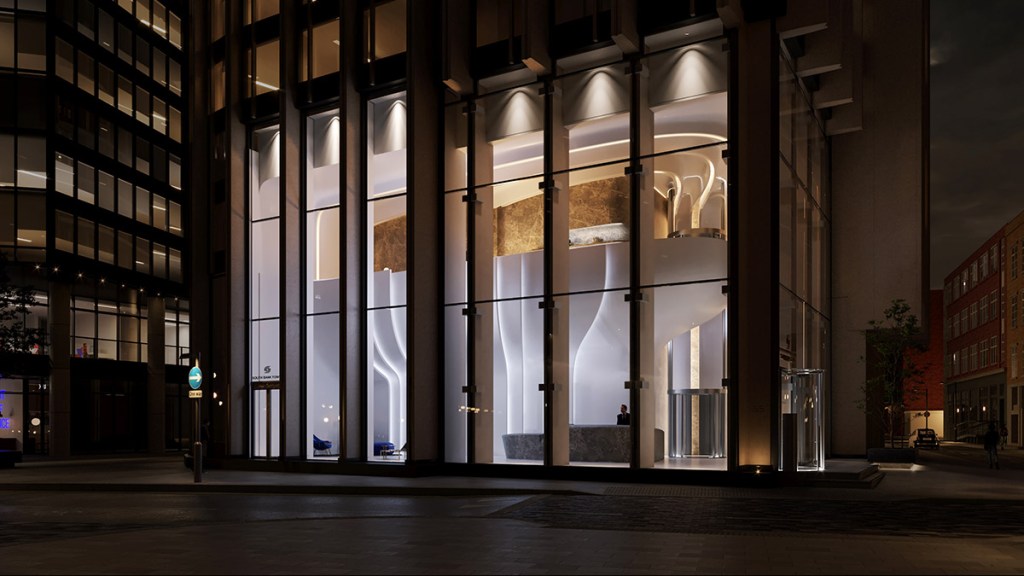
London’s Southbank tower announces its
partnership with Zaha Hadid architects (ZHA) in the transformation of
the residential high-rise lobby.
One of the UK’s most ambitious renovation projects,
the 30-story office building completed by Richard Seifert in 1972 was
converted by KPF in 2015 into a 41-story mixed-use building that incorporates two-
and three-bedroom apartments.
Construction of the 200 square meter lobby will commence in early 2020 and is due for completion in summer 2020.
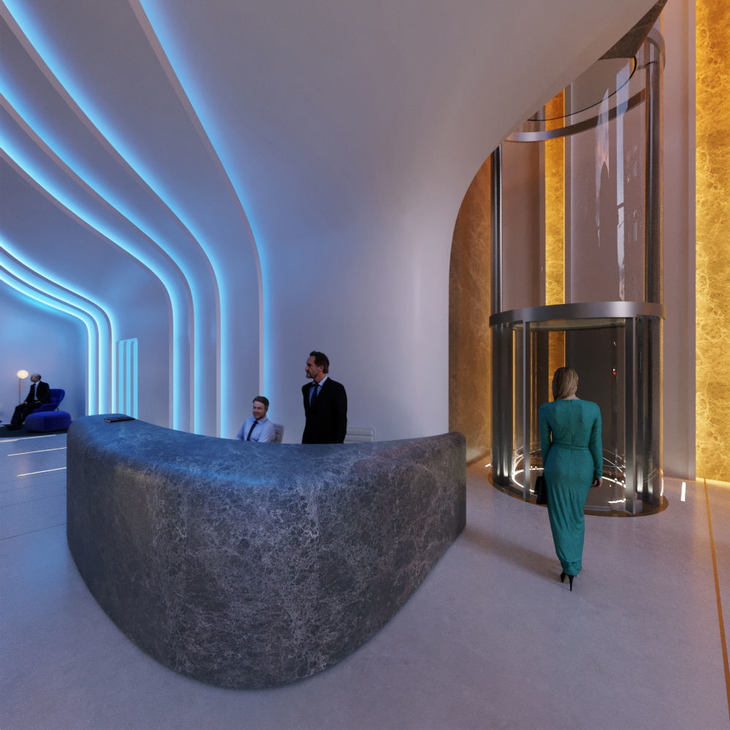
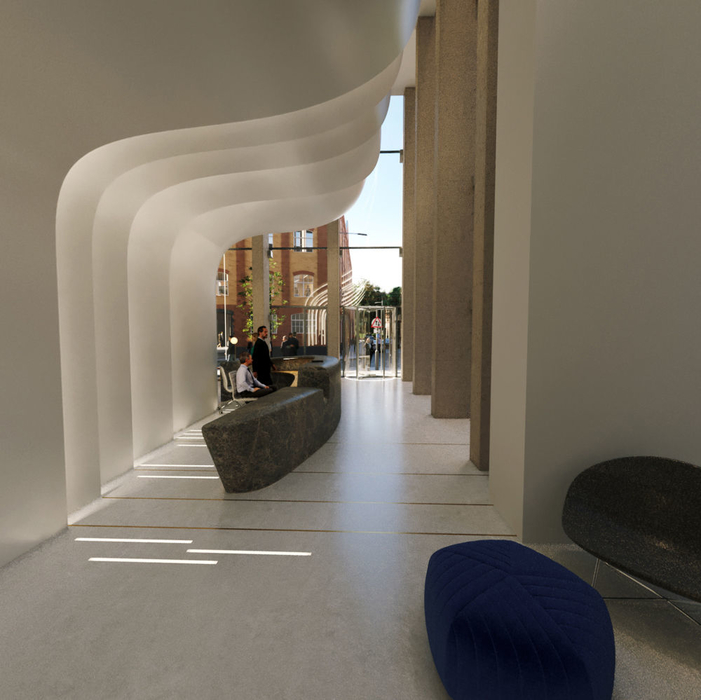
The design of the Southbank tower lobby by Zaha Hadid architects expresses its influence from the organic formation of overlapping flower petals to conceal the lobby’s lighting scheme.
The fluid curves of the structure host the building’s concierge on the ground floor before peeling away at the top to reveal a new mezzanine level which serves as an additional lounge for residents and guests.





 creteluxuryart.design.blog